Cold weather calls for comfort, but that doesn’t mean you have to dive into a pot of heavy beef chili every time the temperature dips. This White Bean Chicken Chili hits all the cozy notes and keeps things light enough to eat on a Tuesday night without throwing your whole health routine off the rails.
It’s hearty, it’s bright with lime, it’s got backbone from cumin and roasted chiles, and it cooks in the amount of time it takes to watch half an episode of Bluey with your kids. Win-win.
Below is how I make it — including a little technique that guarantees tender chicken breast instead of the dreaded rubbery mess.
Chicken breast and chili don’t usually belong in the same sentence. One cooks fast; the other usually simmers forever.
But this recipe flips that dynamic by:
Building flavor up front with aromatics, spices, and roasted chiles
Poaching the chicken gently so it stays juicy
Using white beans two ways: whole for heartiness + partially blended for thickness
Finishing with lime and Maggi (or fish sauce) for depth and brightness
This is weeknight cooking at its smartest.
Base & aromatics
1 tbsp reserved bacon fat (olive oil or any neutral oil also works)
1/2 cup minced onion
2 tsp cumin, plus more to taste
2 (4.4 oz) cans roasted green chiles, drained
2 tsp Mexican oregano
1 tsp kosher salt, plus more to taste
1/2 tsp cayenne, plus more to taste
1.5 tbsp chopped garlic
Protein & bulk
1 lb chicken breast
2 cans cannellini beans, drained and rinsed
Liquid & finishers
4 cups chicken stock
1/3 cup chopped cilantro
1/4 cup lime juice
2 tbsp Maggi sauce (or fish sauce), more to taste
Garnish (optional but recommended)
Avocado
Shredded cheese
Tortilla chips
Heat bacon fat in a Dutch oven or heavy-bottomed pot over medium heat.
Add the onion and cook until soft and translucent — no browning. You want sweetness, not char.
Stir in the cumin, Mexican oregano, salt, garlic, and cayenne. Cook 1–2 minutes until fragrant.
Everything goes in at once: chicken breast, broth, roasted chiles, and cannellini beans.
Bring the pot to a gentle simmer.
Start checking the internal temperature at the 7-minute mark.
Pull the chicken out when it hits 155°F, not a degree more.
If the broth doesn’t fully cover it, flip it occasionally.
This is the key to chicken that shreds beautifully without turning stringy.
Let it rest on a cutting board for 10 minutes.
Use an immersion blender to partially blend the beans right in the pot.
You’re aiming for about 20–30% blended — enough to give body, while leaving most beans whole for texture.
No immersion blender?
Scoop out a cup of beans + broth, blend in a food processor, and return to pot.
Add lime juice, Maggi sauce (or fish sauce or even Worcestershire), and adjust salt and cumin to taste.
Shred or hand-pull the chicken (my preference) and stir it into the chili.
Serve immediately for the best texture.
The chicken will firm up with every reheat, so this is one of those dishes that’s best eaten fresh — or cooled fully and reheated gently.
This chili is extremely flexible:
Avocado adds richness
Shredded cheese makes it feel more “chili-like”
Tortilla chips add crunch
More lime brightens
A dusting of extra cumin brings warmth
If you want it even heartier, add extra beans or corn.
If you want more heat, bump the cayenne or add a diced jalapeño to the onions.
This White Bean Chicken Chili is exactly what cold weather cooking should be: comforting, flavorful, and light enough to keep you on track. It’s also fast, dad-friendly, and the kind of recipe you can make on autopilot once you do it once.
If you make it, hit me in the comments — and tell me your stance on the eternal question:
Can chicken chili still be called chili?
I know what I think.
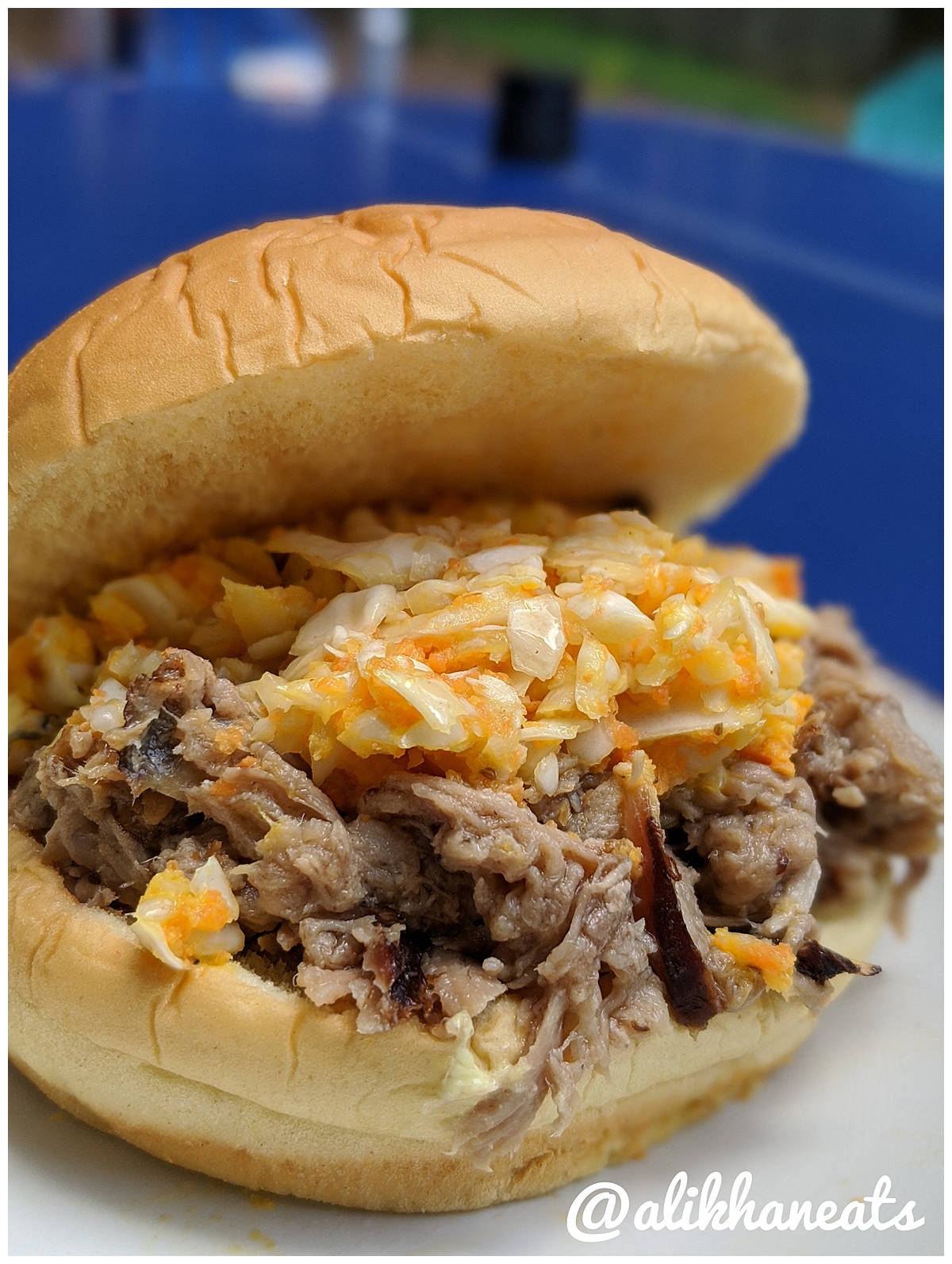
Fast food used to solve two problems: time and money.
You didn’t go to McDonald’s because it was amazing. You went because it was fast, predictable, and cheaper than cooking at home. It was the culinary equivalent of an emergency exit—never glamorous, but always reliable.
That deal is officially dead.
Fast food in 2025 is expensive, slower than advertised, and somehow still serving the same food it did in 2019—just with higher prices and smaller portions. Combo meals pushing $14. Delivery apps adding “convenience fees” that feel suspiciously like punishment. At some point, fast food forgot what it was supposed to fix.
And here’s the part nobody saw coming:
Gas stations noticed.
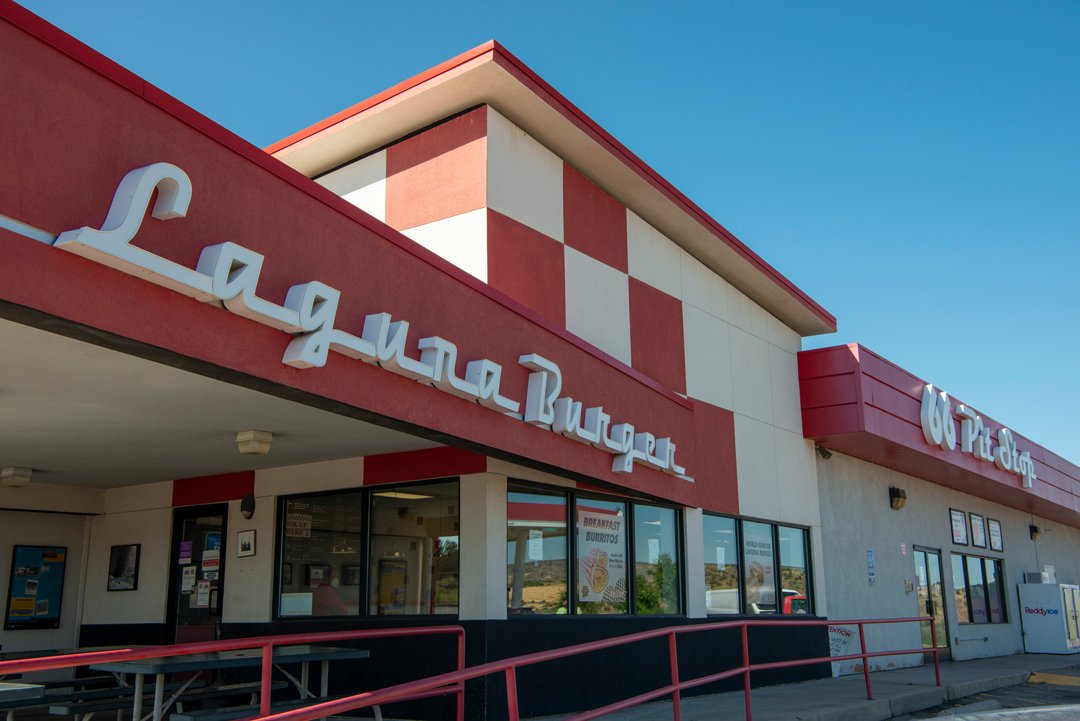
After publishing my episode on why gas stations are becoming the new fast food, my inbox and comment section lit up.
People weren’t arguing.
They were recommending.
Burgers and tacos at Texas gas stations.
Fried chicken in Louisiana that locals swear by.
Late-night hoagies in Philadelphia that somehow outclass national sandwich chains.
Gas station food isn’t a punchline anymore—it’s a movement.
Creators like JL Jupiter have been documenting these spots for years, and now the broader food world is catching up. What used to be desperation dining has turned into something else entirely: value-driven, context-aware eating.
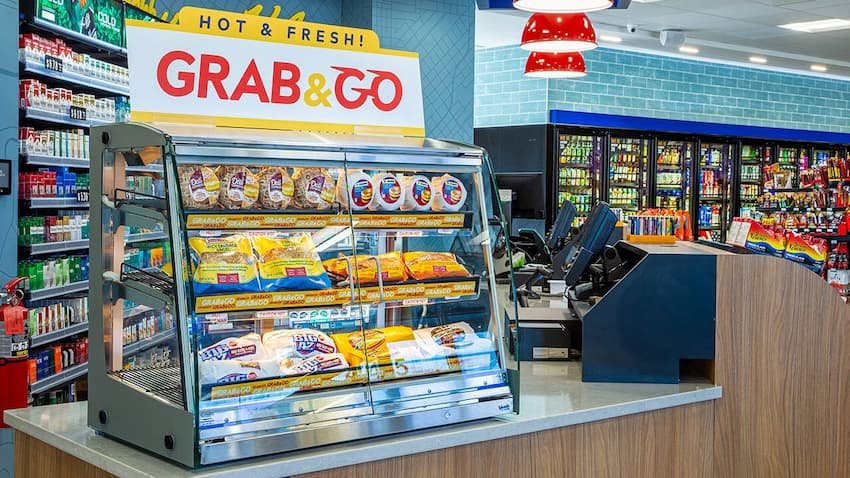
For decades, gas station food meant roller dogs and regret. You ate it only if hunger outweighed dignity.
But while fast food chains were busy chasing “premium” pricing and branding themselves like mid-tier restaurants, gas stations quietly upgraded—without pretending to be something they’re not.
Enter C-store cuisine.
Buc-ee’s.
Wawa.
Sheetz.
Casey’s.
These places asked a radical question:
What if we just fed people… reasonably well?
No judgment. No lifestyle branding. Just hot food, fast service, and prices that don’t make you question your life choices.
The secret isn’t culinary innovation—it’s context.
You didn’t plan to eat at the gas station. You’re already there. You’re hungry, tired, and probably mid-road trip. Expectations are low. And when something clears that bar—even slightly—it feels like a win.
That’s why a decent taco at a Chevron feels heroic.
That’s why a hoagie at 11:43 p.m. can feel emotionally stabilizing.
Gas stations don’t promise excellence. They promise convenience. And when they exceed expectations, people remember.
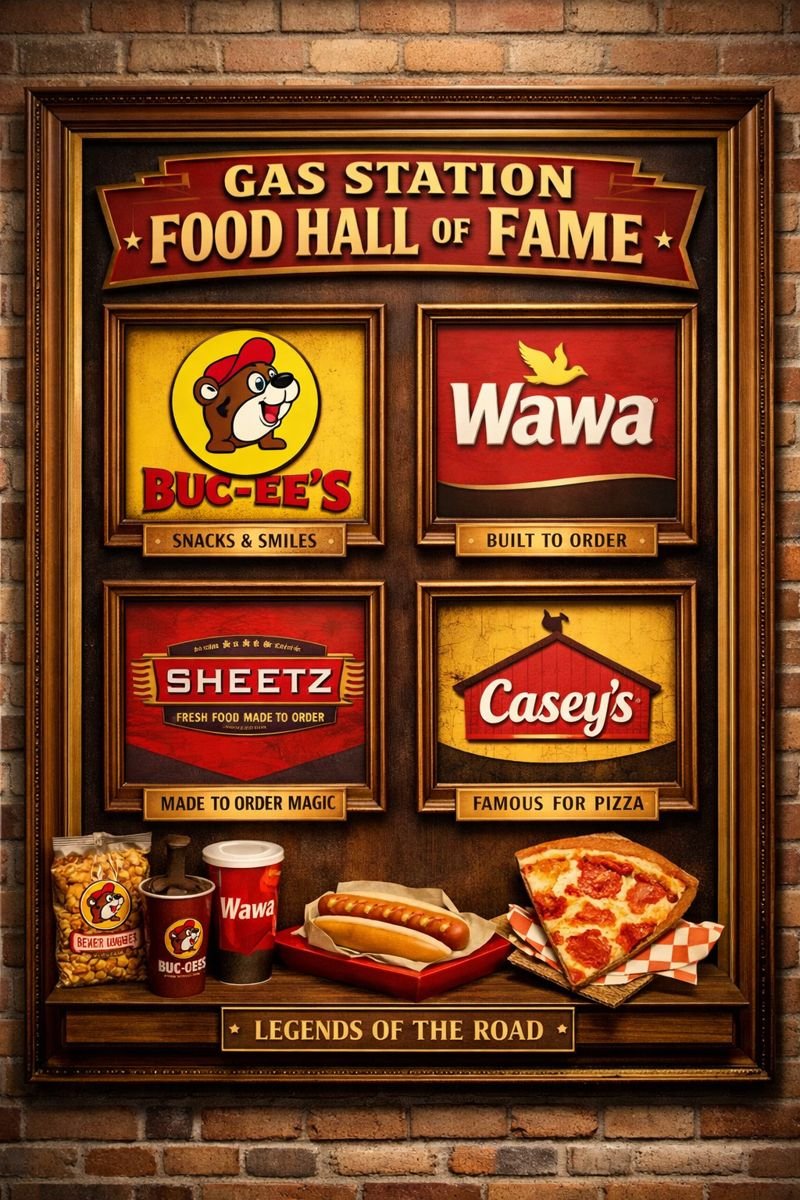
Wawa isn’t a gas station in the Northeast—it’s infrastructure. The company reportedly sells over 100 million hoagies a year, which tells you everything you need to know. Are they the best sandwiches you’ll ever eat? No. Are they the most reliable at midnight? Absolutely.
Buc-ee’s took things further. Somehow, America collectively agreed that brisket chopped next to windshield washer fluid was acceptable. Texas Monthly didn’t just review Buc-ee’s barbecue—they investigated it. That’s when you know something cultural has shifted. Is it the best BBQ in Texas? No. Is it good enough to plan a road trip around? Yes.
Sheetz leaned fully into indulgence. Mozzarella stick burgers. Loaded fries. Food that understands the assignment: comfort, speed, zero judgment.
Then there’s 7-Eleven, the wild card. Many U.S. locations are still playing hot-dog roulette. But 7-Eleven Japan? Elite. Their egg salad sandwich has its own fanbase, and plans are underway to bring versions of that model stateside. If they import the discipline—not just the product—they could change the game. If not, we’re still rolling the taquito dice.
Gas stations aren’t replacing fast food because they’re better restaurants.
They’re replacing fast food because people are tired.
Tired of overpaying.
Tired of upsells.
Tired of disappointment.
In an economy where value beats vibes, the places that win are the ones that feed you without asking questions. Gas stations understand that better than most brands chasing relevance on TikTok.
Fast food tried to become aspirational.
Gas stations stayed practical.
And practicality is winning.
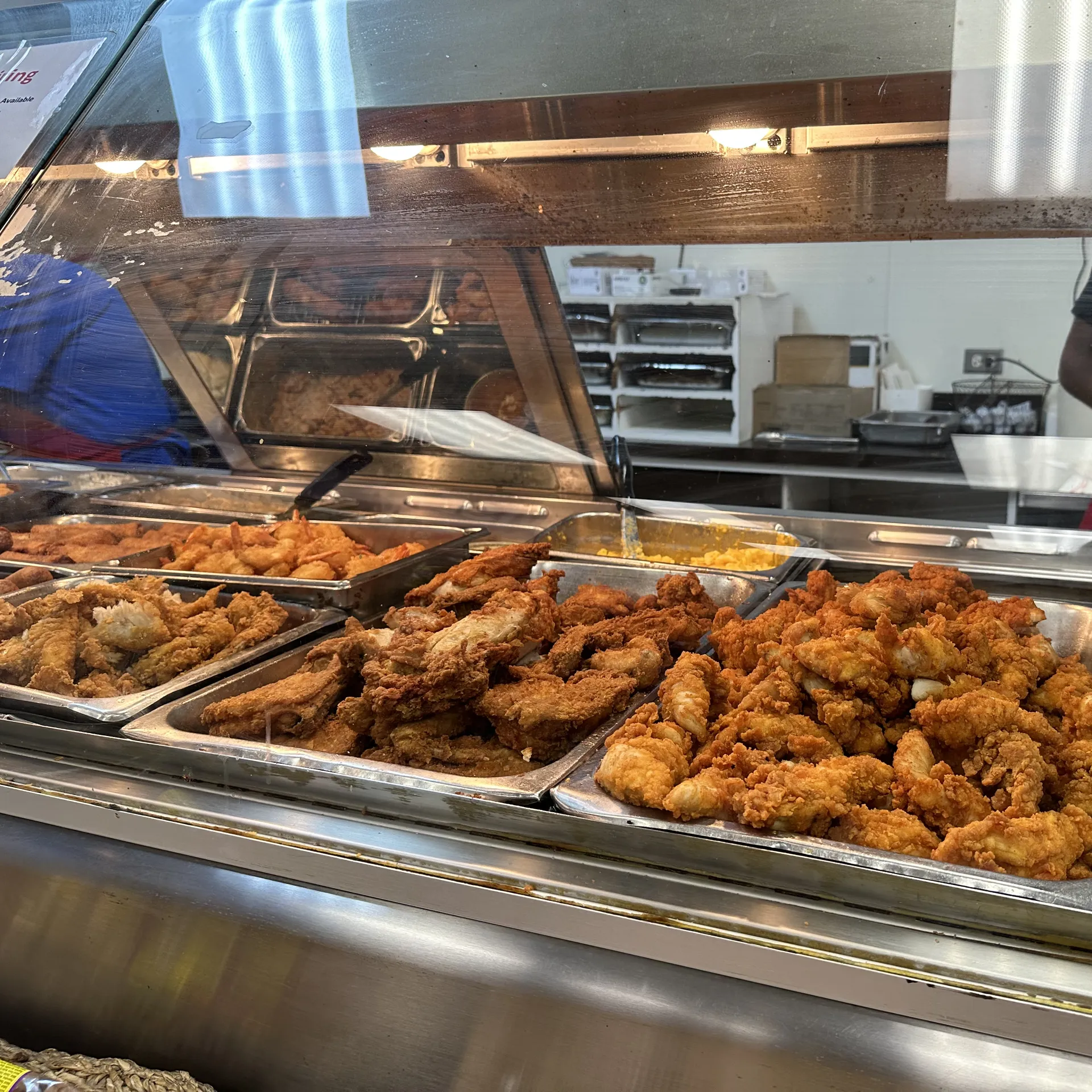
Not every gas station is good. Most are still a gamble. But the direction is clear.
The future of fast food isn’t a drive-thru.
It’s a hot case next to a gas pump.
And judging by the recommendations flooding my inbox—from Texas burgers to Louisiana fried chicken to Philly hoagies—the people have already voted.
In 2025, this makes perfect sense.
Trader Joe’s looks like a grocery store.
It smells like a grocery store.
It even feels like a grocery store — right up until you try to make an actual meal.
That’s when you realize something important:
Trader Joe’s isn’t really a supermarket.
It’s a very charming illusion.
And honestly? That illusion might be its greatest achievement.
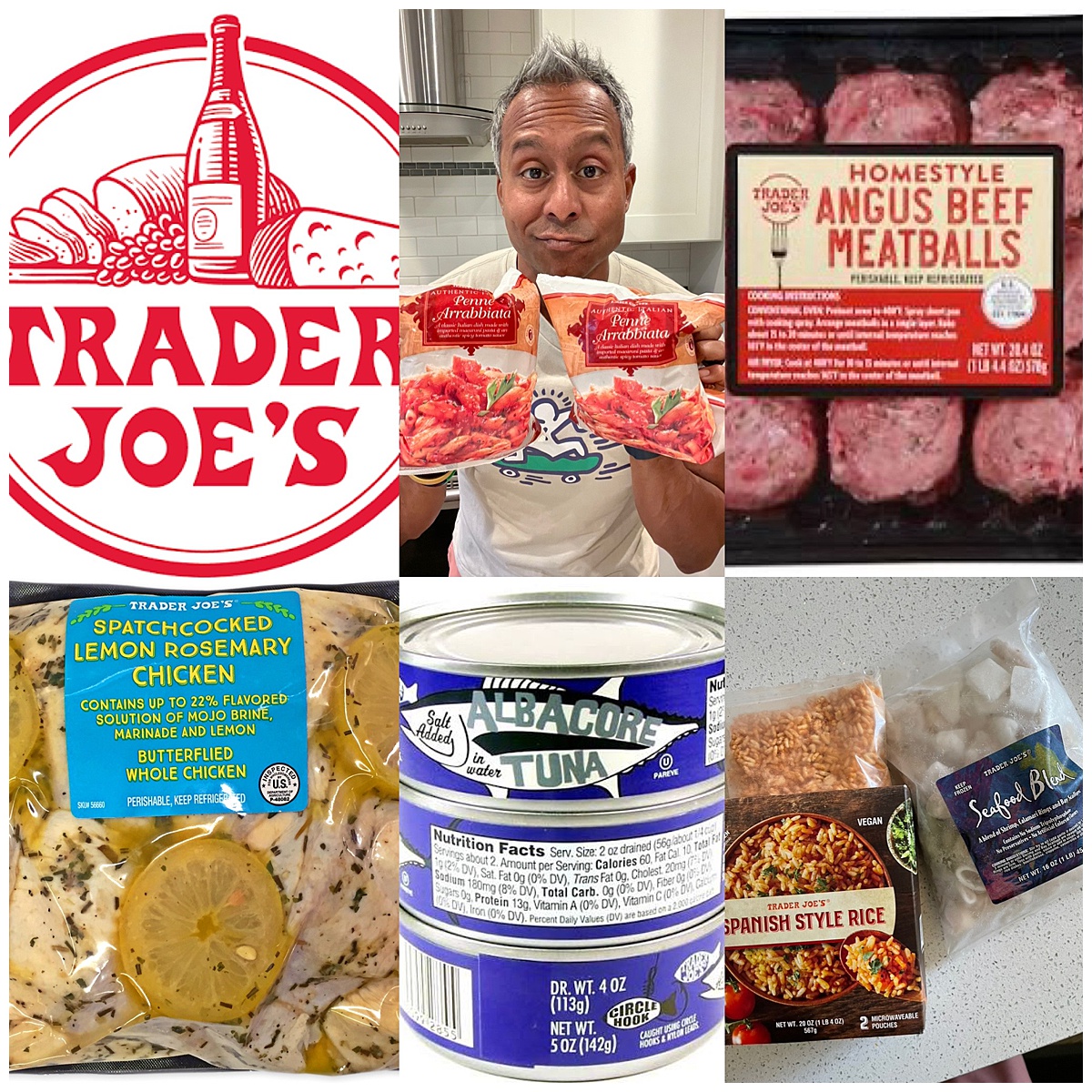
Traditional grocery stores are built on choice.
Trader Joe’s is built on mercy.
You won’t find 17 brands of pasta sauce here. You’ll find one. And Trader Joe’s has already decided it’s “the good one.” You’re welcome.
This isn’t about limiting options — it’s about limiting anxiety.
In a world where food decisions feel like unpaid homework, Trader Joe’s quietly says, Relax. We got this.
That’s not a grocery strategy. That’s emotional labor.
Here’s the take that makes Trader Joe’s fans nervous:
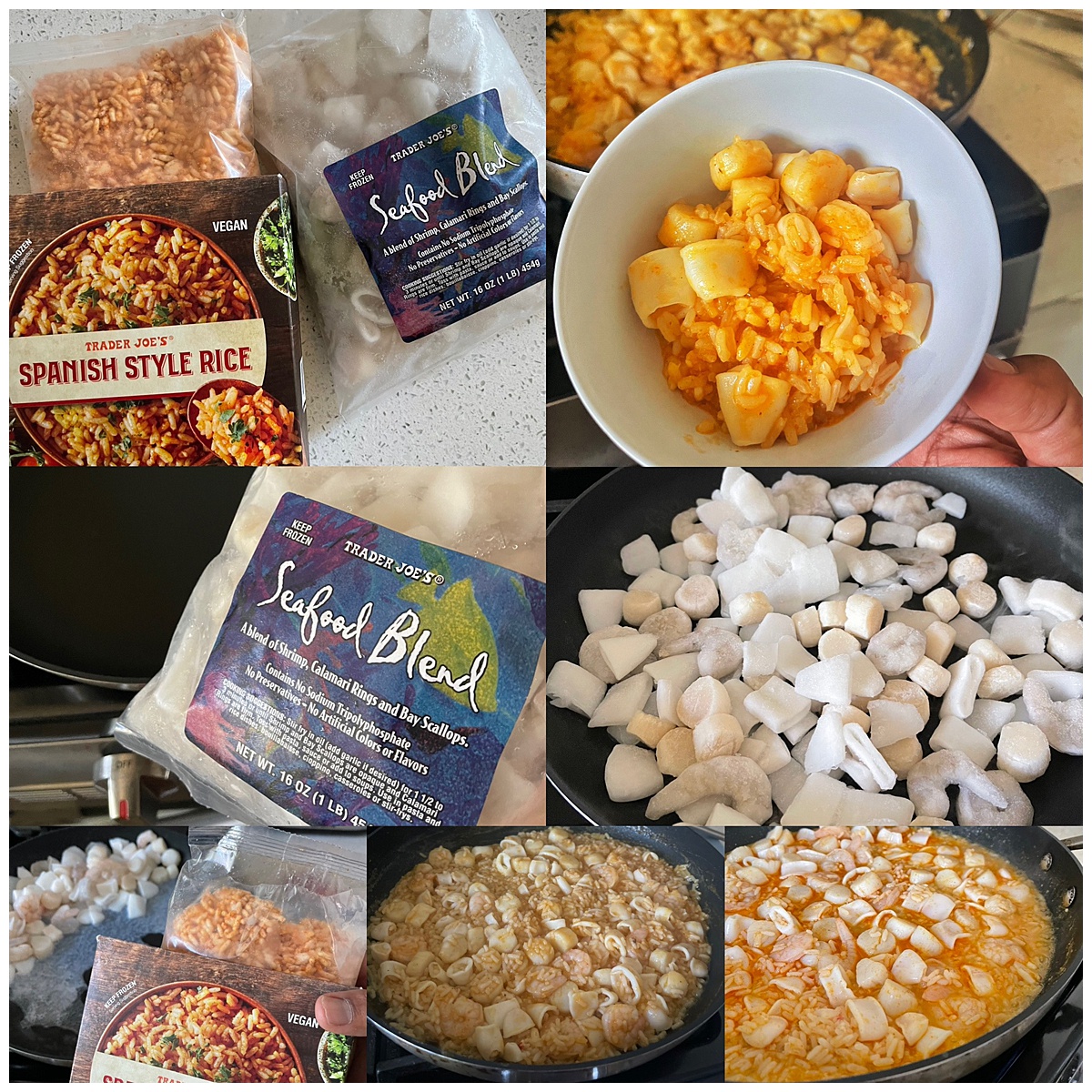
Trader Joe’s behaves more like a convenience store than a supermarket.
Most of the food is:
Pre-flavored
Pre-marinated
Pre-cooked
Frozen, sauced, or halfway to dinner already
It’s food for people who love eating…
but don’t necessarily love cooking.
Or planning.
Or deciding.
You’re not wandering aisles.
You’re being gently guided.
This isn’t shopping.
This is culinary autopilot — with better fonts.

Trader Joe’s feels affordable for a few reasons:
Smaller portions
Friendly packaging
Prices that don’t immediately cause regret
But value isn’t just about price. It’s about usefulness.
You can leave Trader Joe’s with:
Four snacks
Two dips
One frozen thing you’re excited about
And still no actual dinner.
That’s not a mistake.
That’s the design.
Trader Joe’s optimizes for discovery, not completeness.
It wants you delighted — not stocked for the week.
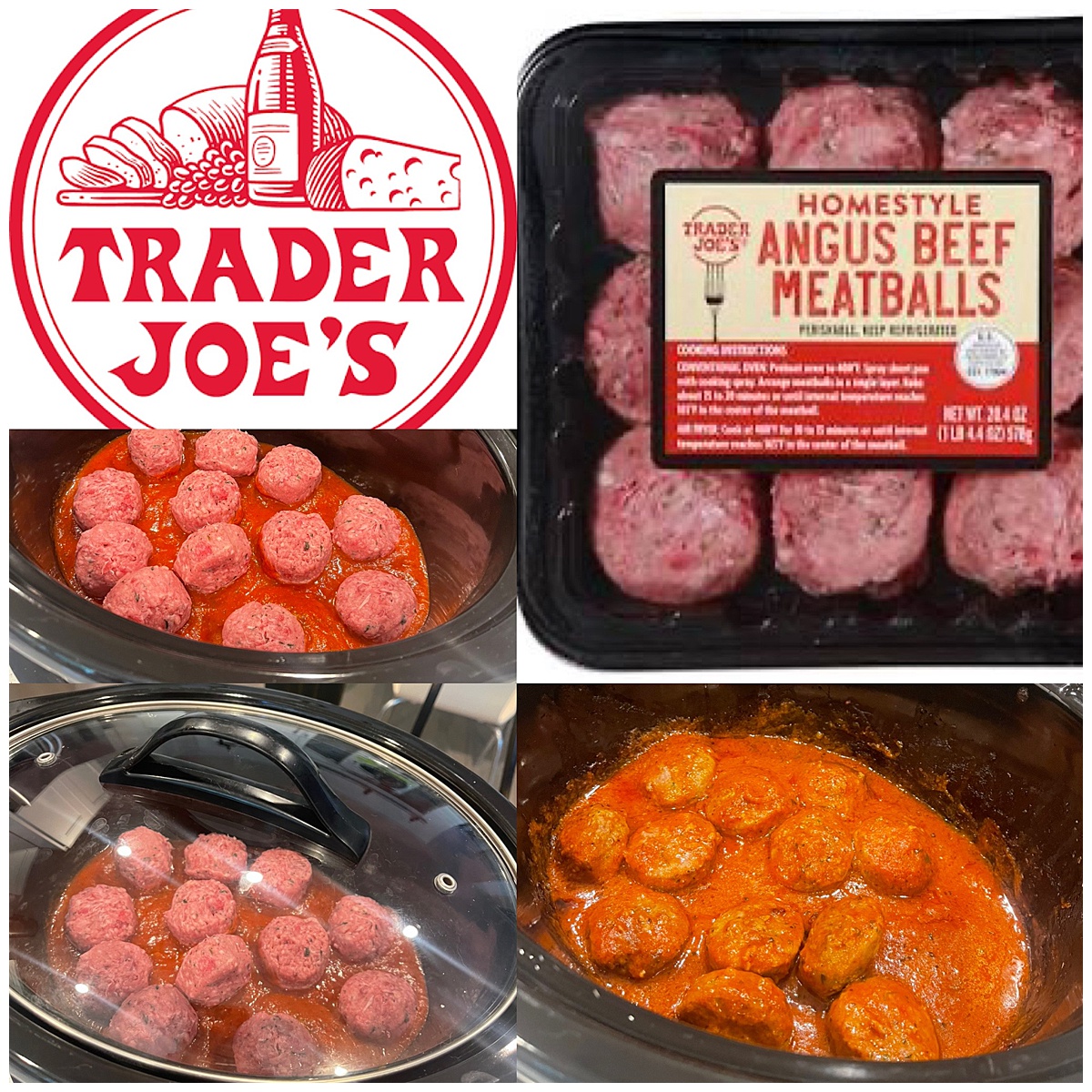
Here’s the real magic trick.
In a stressed-out food economy, Trader Joe’s didn’t replace grocery stores.
It replaced decision-making.
When people are tired, overworked, underpaid, and overthinking every purchase, they don’t want more options. They want fewer decisions they can trust.
Trader Joe’s understood that before most retailers did.
And millions of shoppers responded with the same thought:
Thank God.
That depends on what you need.
If you want:
Discovery
Comfort
Snacks with personality
Dinner-adjacent solutions
Trader Joe’s is undefeated.
If you want:
One-stop grocery shopping
Meal planning
Control
You’re going to Costco. Or a real supermarket. Or therapy.
I go deeper into how Trader Joe’s fits into America’s obsession with value — alongside Costco, Whole Foods, and even Buc-ee’s — in this week’s episode of Outrageous Foods.
👉 Watch the full episode on YouTube
Trader Joe’s works because it doesn’t try to be everything.
It tries to make food feel manageable again.
And in 2025?
That might be the most valuable thing it sells. Oh and if you really don't like cooking, check out my latest restaurant round up here.
As 2025 winds down, fate brought me to Philadelphia twice in just a matter of weeks — and did I eat well. Last year I shared my highlights from the City of Brotherly Grub. This year, the grub keeps coming. I won’t pretend this is the complete list of the Best Food in Philadelphia, but if you’re wondering where to eat in Philly right now, this is the list I’d point you toward. And honestly? We’re just scratching the surface.
 The Vitals:
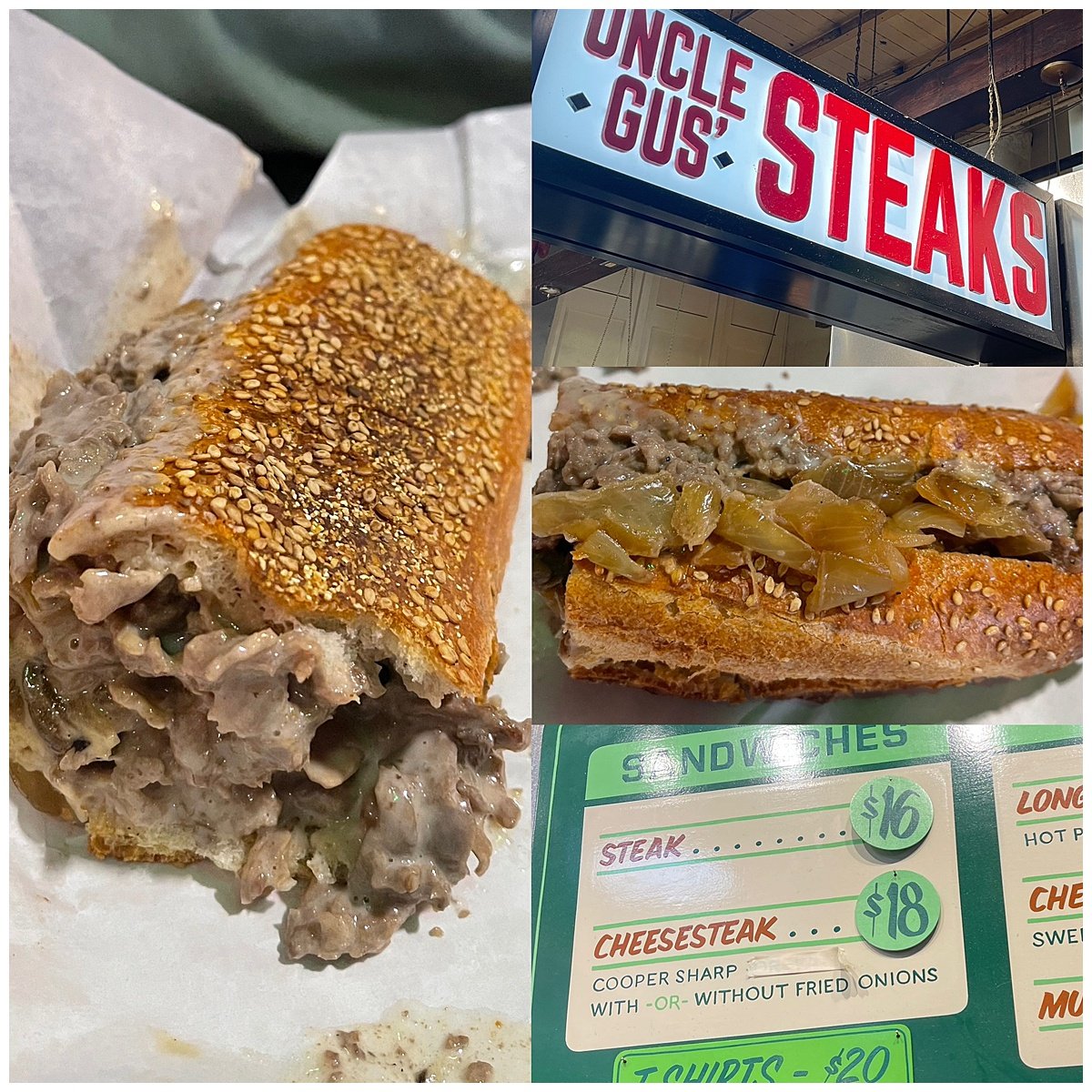
the spot: Uncle Gus' Steaks 1136 Arch St, Philadelphia, PA 19107 (inside Reading Terminal Market
the eats: Cheesesteak
the bucks: $18
the full nelson: the first solid cheesesteak at Reading Terminal
The Vitals:
the spot: Uncle Gus' Steaks 1136 Arch St, Philadelphia, PA 19107 (inside Reading Terminal Market
the eats: Cheesesteak
the bucks: $18
the full nelson: the first solid cheesesteak at Reading Terminal
Tourists should love Reading Terminal Market. Locals should loathe how crowded it gets. Either way, it’s unavoidable — and until recently, it didn’t have a great cheesesteak. That finally changed.
Food critic Craig LaBan co-signed Uncle Gus’ as the first “real deal” cheesesteak in the market, and he’s right. The roll — a fresh-baked sesame-seeded beauty from sibling restaurant Angelo’s Pizzeria — sets the tone. You get a sizeable, shareable cheesesteak that holds its own against Philly icons.
If you’re visiting from out of town, this sandwich will impress. If you’re a local, you’ll appreciate that it exists in such a tourist-heavy spot. And if you’re chasing the Best Food Philadelphia has to offer in the cheesesteak department? Add John's Roast Pork and Jim’s South Street to round out a DIY cheesesteak tour.
 The Vitals:
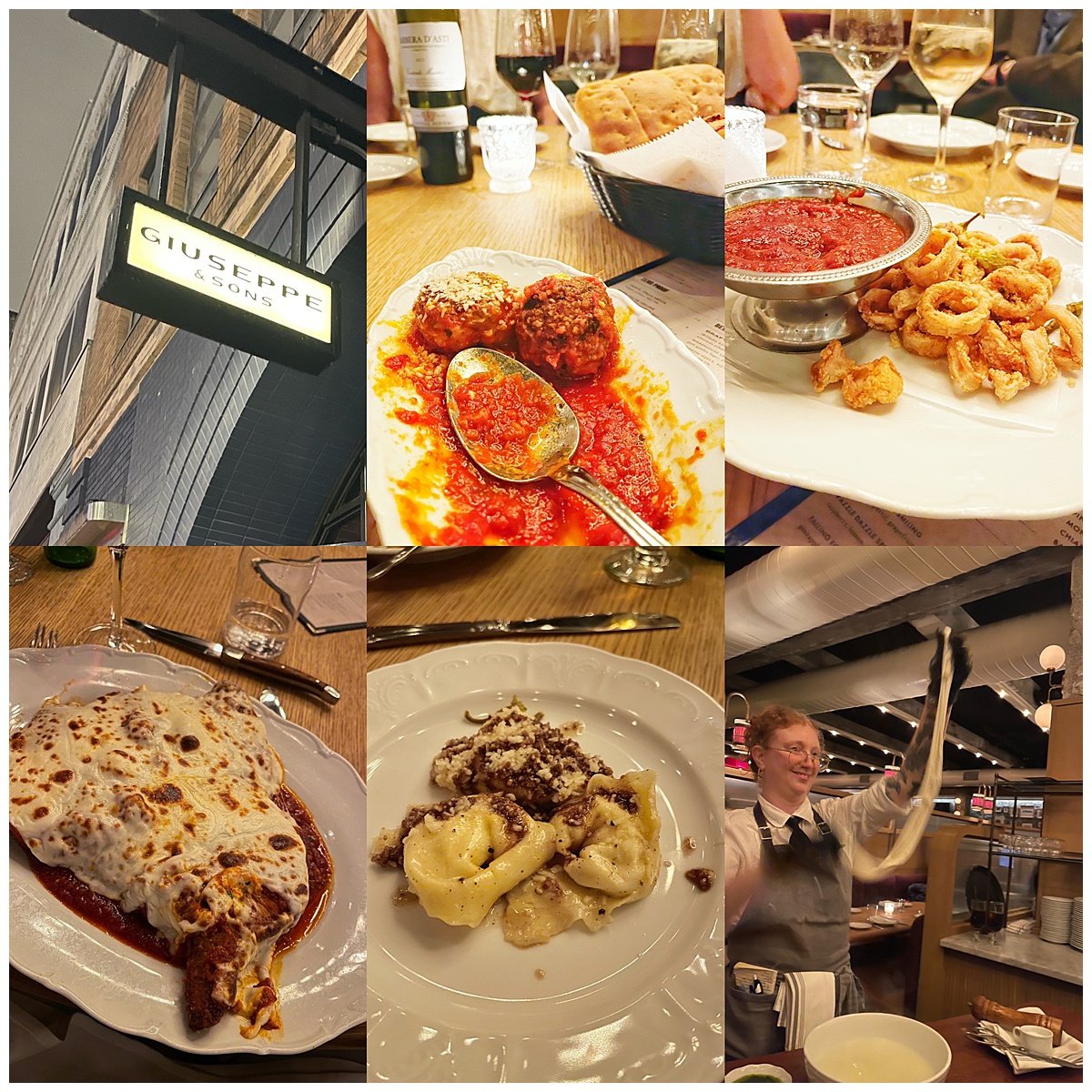
the spot: Giuseppe and Son's 1523 Sansom St, Philadelphia, PA 19102
the eats: Pork Chop Parmigiana, Meatball and Gravy, Hand Pulled Mozzarella, whatever pasta they suggest
the bucks: $$-$$$
the full nelson: one of the heartiest Cutlet Parms I've ever had, probably because it was a bone in pork chop
The Vitals:
the spot: Giuseppe and Son's 1523 Sansom St, Philadelphia, PA 19102
the eats: Pork Chop Parmigiana, Meatball and Gravy, Hand Pulled Mozzarella, whatever pasta they suggest
the bucks: $$-$$$
the full nelson: one of the heartiest Cutlet Parms I've ever had, probably because it was a bone in pork chop
Growing up on white-tablecloth Italian American joints in the Midwest, I have a soft spot for red sauce done with gusto. My kid loves meatballs. Giuseppe & Son’s delivered for both of us.
Yes, it’s part of a big, successful restaurant group — so maybe it doesn’t have that 100-year-old-mom-and-pop patina. But the red sauce (or “gravy,” depending on where you’re from) hits the spot like few others. The hand-pulled mozzarella, stretched and plated tableside, is pure spectacle. And the Pork Chop Parmigiana? A revelation. A bone-in chop resting on a bed of bolognese. Meat sauce on meat is my love language.
At $31, the chop felt very fair — rich, shareable, and memorable. If you’re craving hearty Italian American fare in Center City, this is truly among the best places to eat in Philadelphia.
 The Vitals:
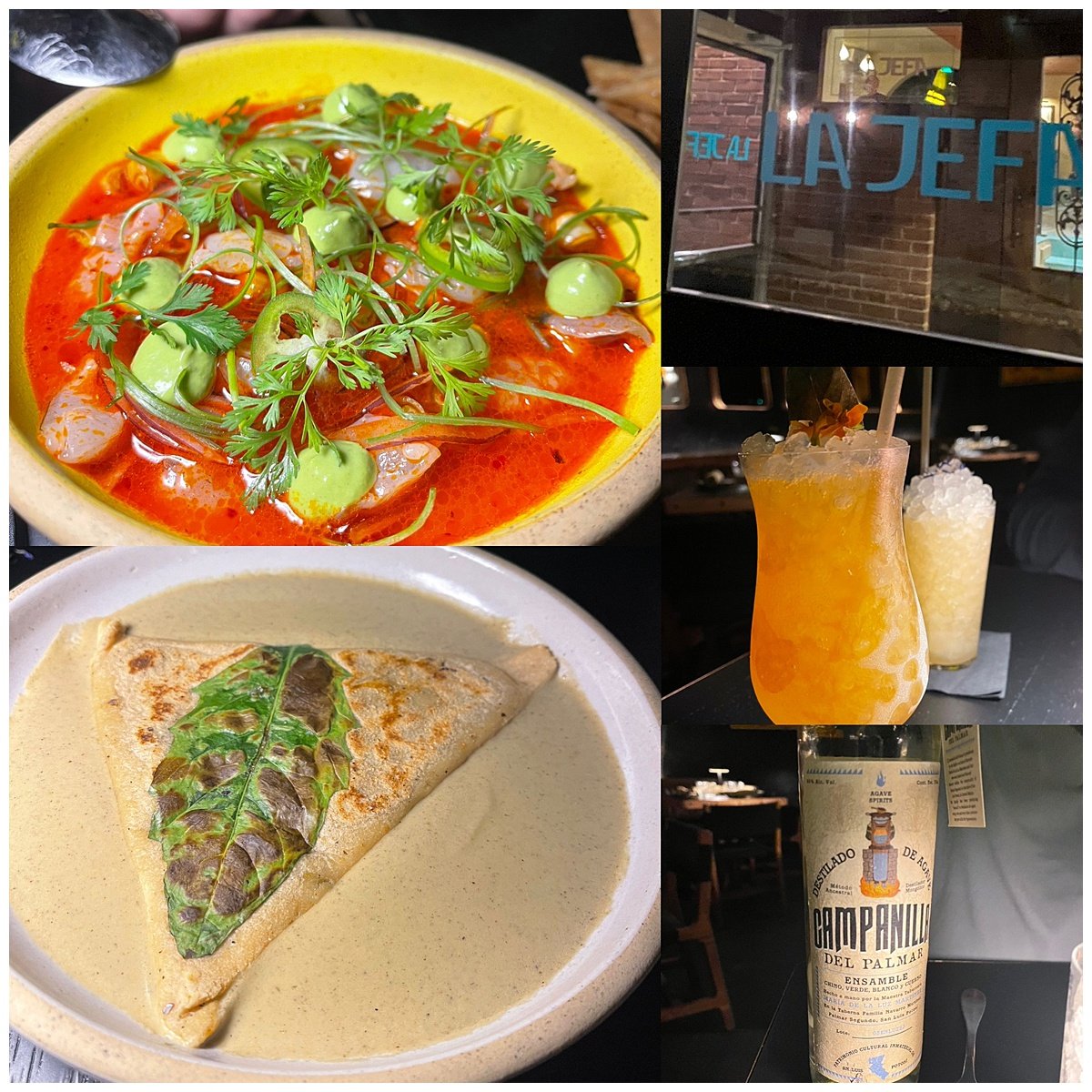
the spot: La Jefa Cafe 1605 Latimer St, Philadelphia, PA 19103
the eats: Mezcal drinks, Aguachile and any thing covered in Pipian mole
the bucks: $$$
the full nelson: I felt like Anthony Bourdain in Mexico
The Vitals:
the spot: La Jefa Cafe 1605 Latimer St, Philadelphia, PA 19103
the eats: Mezcal drinks, Aguachile and any thing covered in Pipian mole
the bucks: $$$
the full nelson: I felt like Anthony Bourdain in Mexico
I have the great Craig LaBan to thank for pointing me toward La Jefa Café — part of a three-restaurant group run by the Suro family, pillars in the Mexican American culinary world. Honestly, someone needs to write a book on “Mexadelphia,” because the Mexican food scene in Philly is deep, dynamic, and absolutely worth traveling for.
The mezcal list here is serious. Rare bottles, thoughtful cocktails, and bartenders who know how to treat agave spirits with respect. And the food? Thoughtful, soulful, and layered with flavor. The pumpkin seed pipian mole stunned me — savory, complex, and made with vegetable stock, which shocked me after tasting it.
Philadelphia isn’t the first city most people think of for Mexican cuisine. It should be. Skip a cheesesteak (or three) and dive deep here. La Jefa isn’t the priciest spot in town, but it’s absolutely one of the best restaurants in Philadelphia if you’re looking for something special.
 The Vitals:
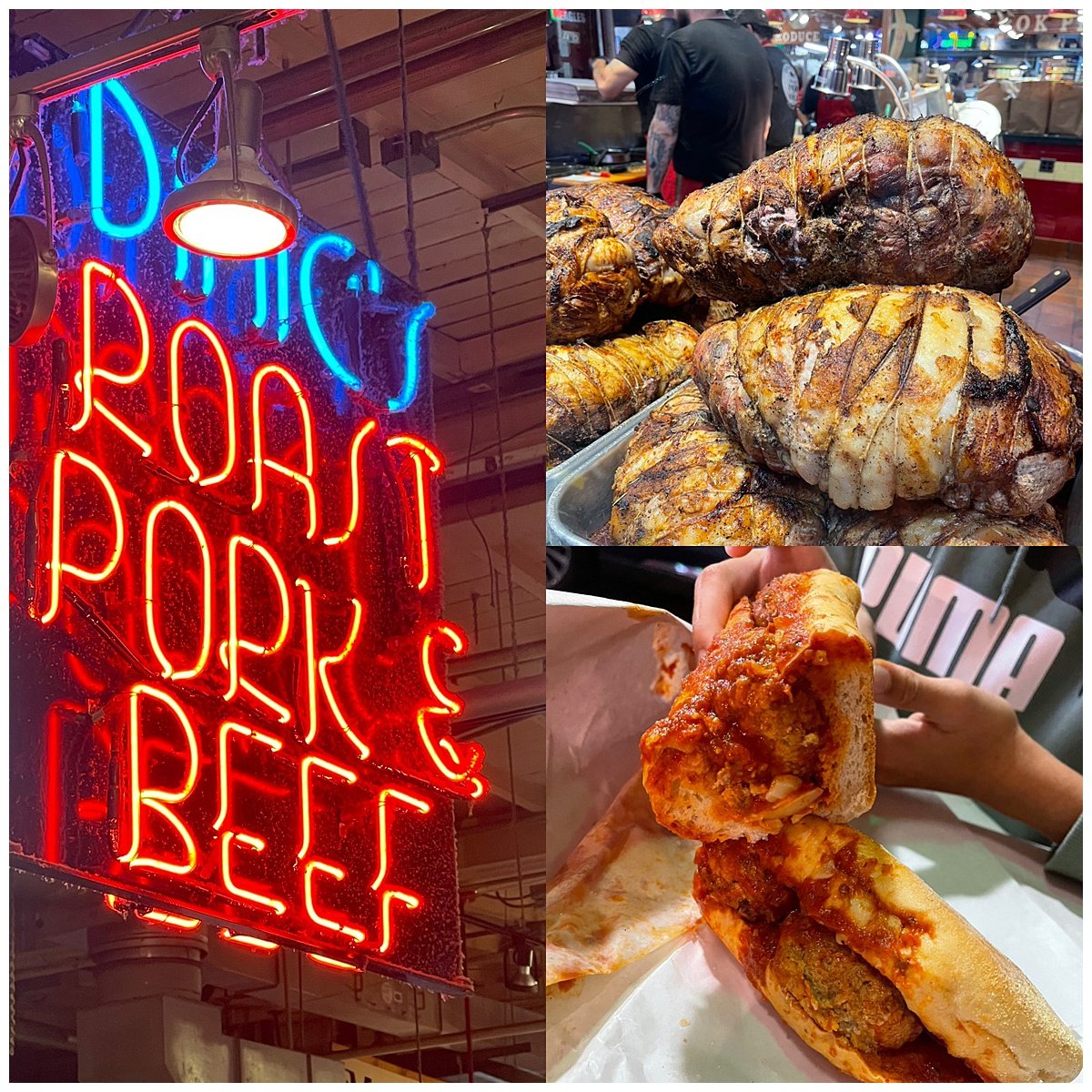
the spot: Tommy Dinic's 51 N. 12th St. Philadelphia PA 19107 (inside Reading Terminal Market)
the eats: Meatball sandwich
the bucks: $16
the full nelson: the most overlooked sandwich at Reading Terminal
The Vitals:
the spot: Tommy Dinic's 51 N. 12th St. Philadelphia PA 19107 (inside Reading Terminal Market)
the eats: Meatball sandwich
the bucks: $16
the full nelson: the most overlooked sandwich at Reading Terminal
I’m lucky my son adores meatball sandwiches because it gives me an excuse to seek out this often-overlooked hoagie. Sure, cheesesteaks get the spotlight. And Philly’s roast pork sandwich is rightfully the city’s proudest son. But ask around, and you’ll learn that meatballs and gravy are just as essential to the city's edible DNA.
Dinic’s meatballs are tender, likely a blend of pork, veal, and beef — though the beef takes a backseat, which I prefer. A great meatball shouldn’t feel like a misshapen burger patty; it should have soul. What really elevates this sandwich is the red sauce and parm. It’s simple. It’s messy. It’s perfect. And like Gus’, this sandwich is easily shareable.
If you’re stocking up on Best Food Philadelphia contenders inside Reading Terminal, don’t sleep on this one.
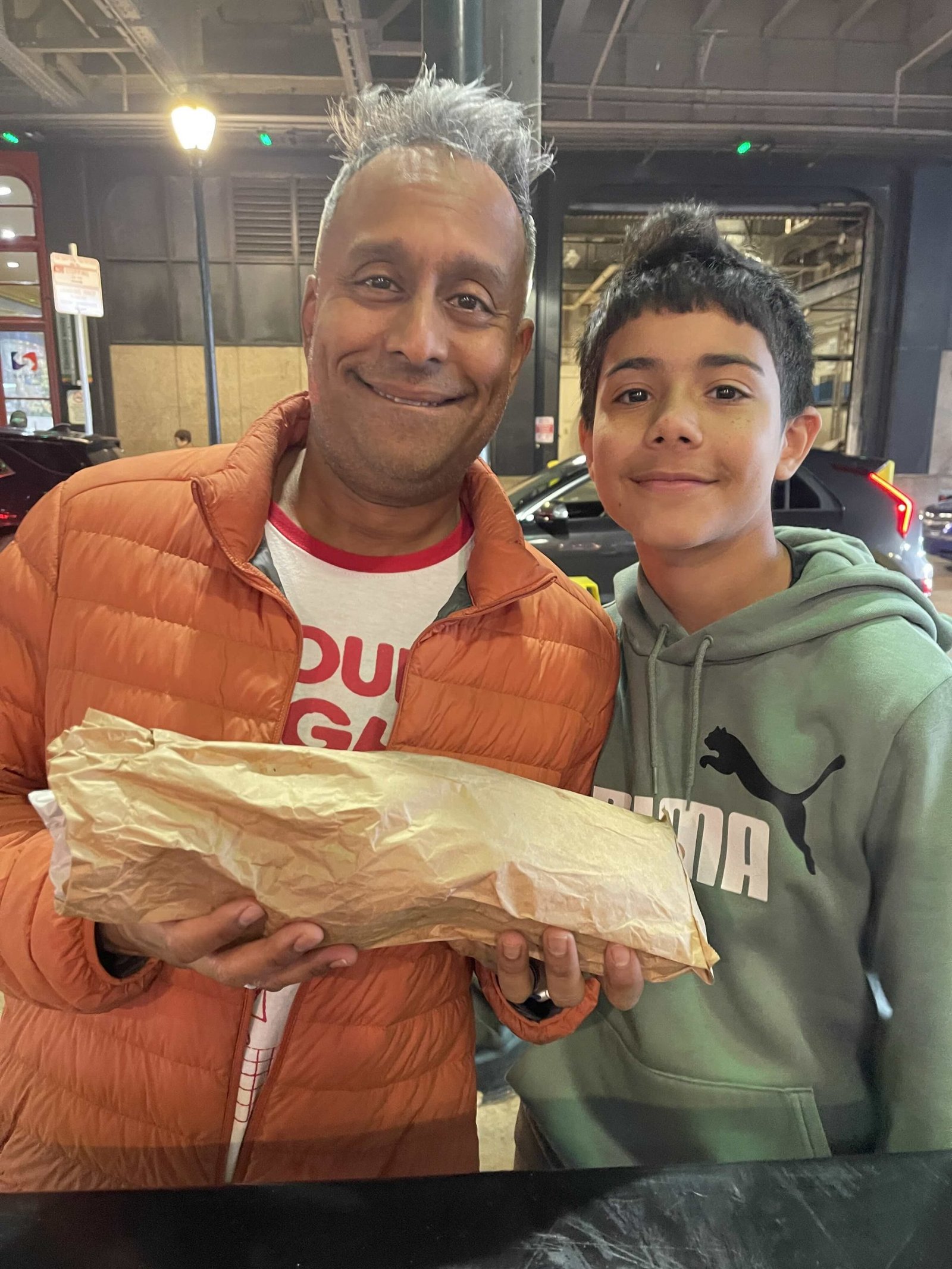
This list leans tourist-friendly — Center City, Reading Terminal Market, and one reservation across a few short days. But it’s still representative of Philadelphia’s incredible food culture. From Mexadelphia mezcal bars to bone-in pork chop parms to the newest “it” cheesesteak, Philly delivers at every level.
Hoagies might be creeping up toward $20 (yes, they’re shareable), but the city remains one of the most accessible and rewarding food destinations in America. And whether you're planning your first visit or returning for another round, this guide hits the core of the Best Food Philadelphia has to offer right now.
The best food in Austin Texas for the month of November includes All You Can Eat Korean BBQ + Hot Pot, a Middle Eastern sandwich speciality, an heirloom corn focused bakery and an old school Midwest Supper Club pop up. As always take notes or really just bookmark this page.
 The Vitals:
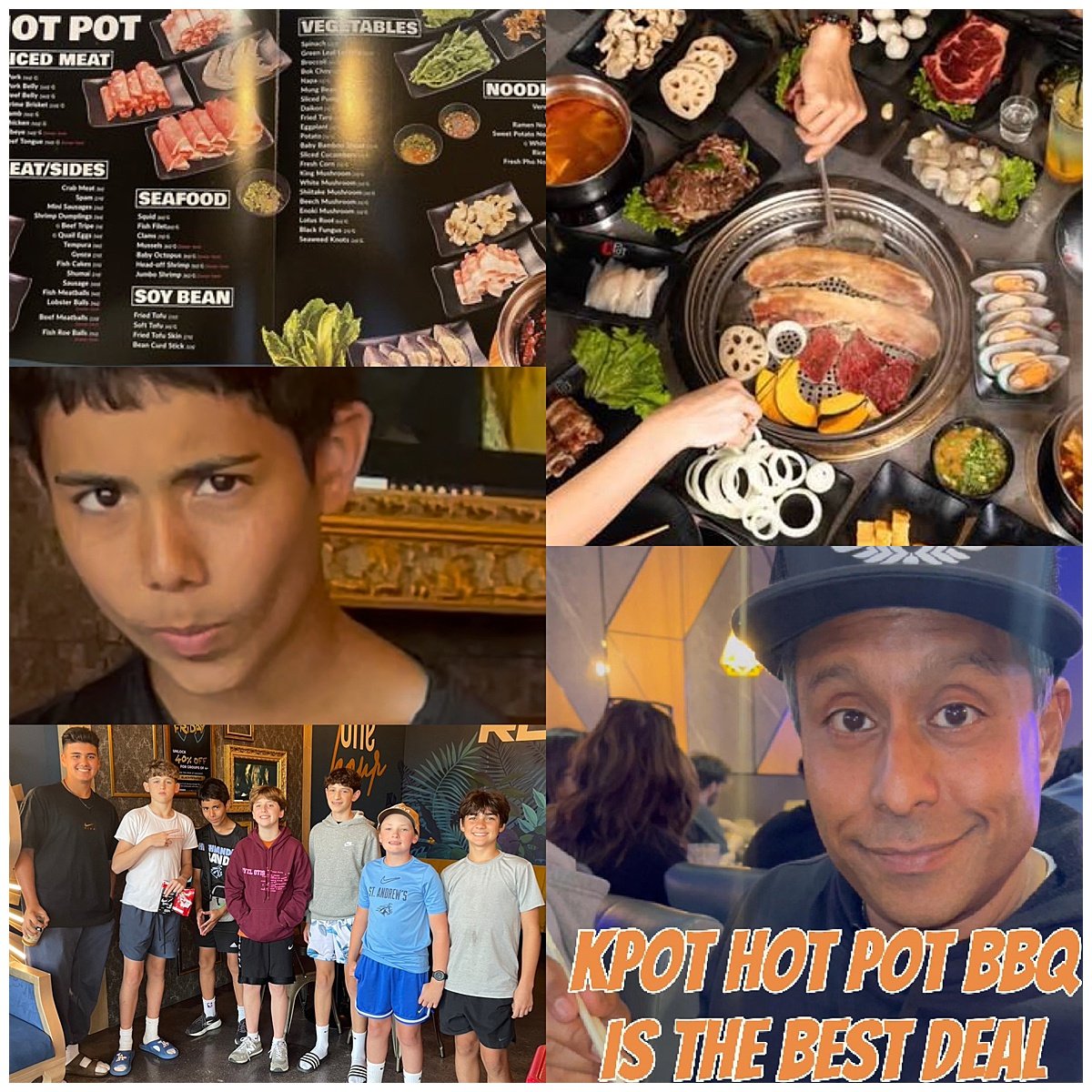
the spot: KPOT Korean BBQ and Hot Pot 5200 Brodie Ln, Sunset Valley, TX 78745
the eats: all you can eat Korean BBQ and Hot Pot
the bucks: $$
the full nelson: the greatest restaurant to take a 14 year old and his crew
The Vitals:
the spot: KPOT Korean BBQ and Hot Pot 5200 Brodie Ln, Sunset Valley, TX 78745
the eats: all you can eat Korean BBQ and Hot Pot
the bucks: $$
the full nelson: the greatest restaurant to take a 14 year old and his crew
Let’s get right to it: finding a place that satisfies a crew of ravenous teenage boys is harder than scoring brisket at Franklin on Memorial Day weekend. But KPot is built for that mission. This Korean BBQ and hot pot chain hybrid feels like it was engineered for feeding growth spurts — sizzling meats, customizable broths, dipping sauces, and everything cooked right at the table.
We took my son and a small army of 14-year-olds for his birthday, and yes, it was chaos — but in the best, most delicious way. Watching teens discover bulgogi and dunk ribeye into broth is its own joy. This isn’t just “all you can eat,” it’s “all you can cook and devour as fast as they bring it.” It may not be a quiet evening, but it is guaranteed edible entertainment for the whole crew.
 The Vitals:
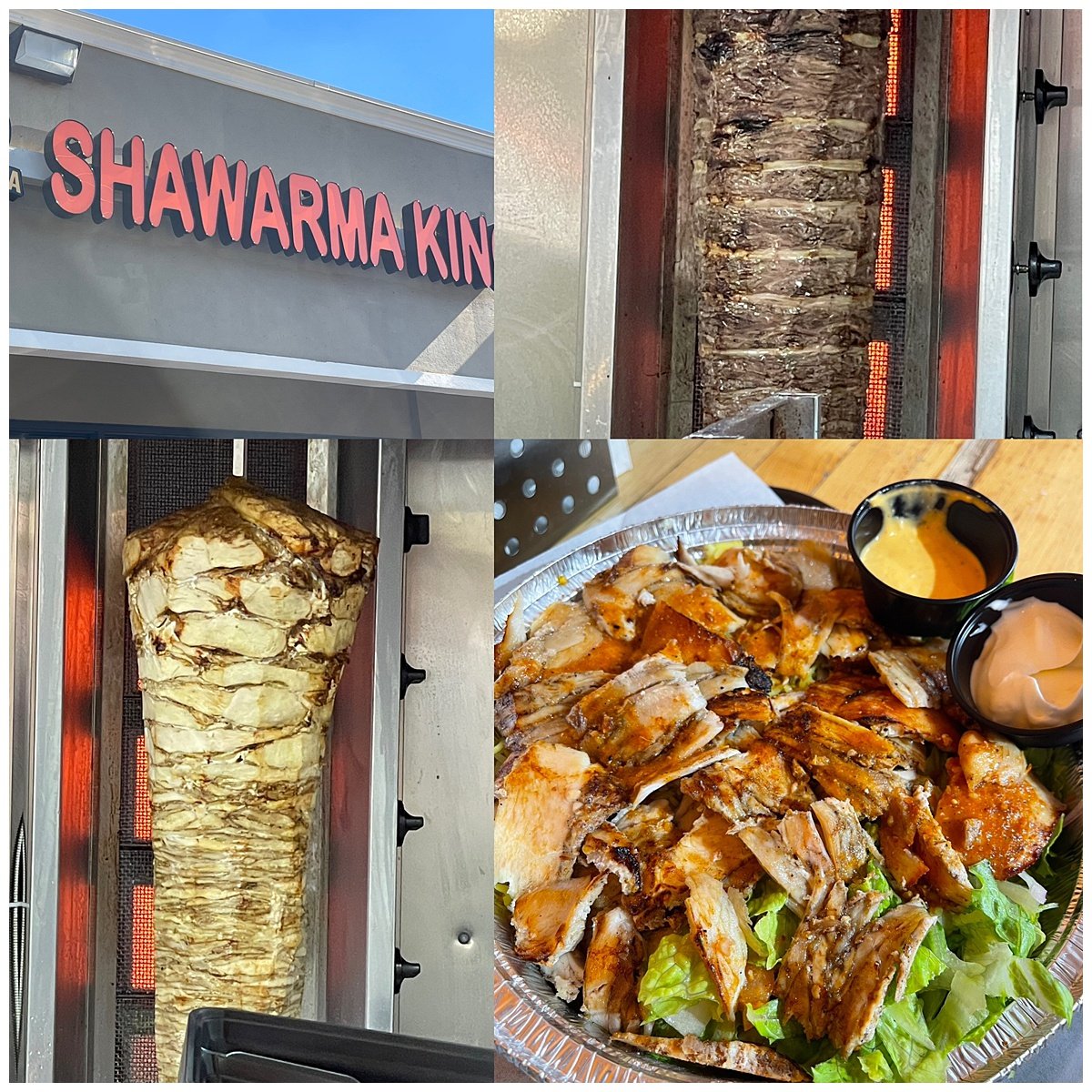
the spot: Shawarma King 3211 Red River St, Austin, TX 78705
the eats: a Jordanian Shawarma specialist
the bucks: $
the full nelson: solid shawarma find
The Vitals:
the spot: Shawarma King 3211 Red River St, Austin, TX 78705
the eats: a Jordanian Shawarma specialist
the bucks: $
the full nelson: solid shawarma find
I love when seasoned talent spawns an offshoot idea — especially when the result is smokey rotisserie meat wrapped in warm bread. Shawarma King is descended from a well-regarded Jordanian kebab restaurant, but instead of trying to do everything, it laser-focuses on shawarma. The result? Juicy sliced chicken and beef that hits you with aromatic Middle Eastern spices, and excellently carved.
Austin is a far cry from Detroit or even Houston when it comes to Middle Eastern fare but Shawarma King is a delicious exception.
 The Vitals:
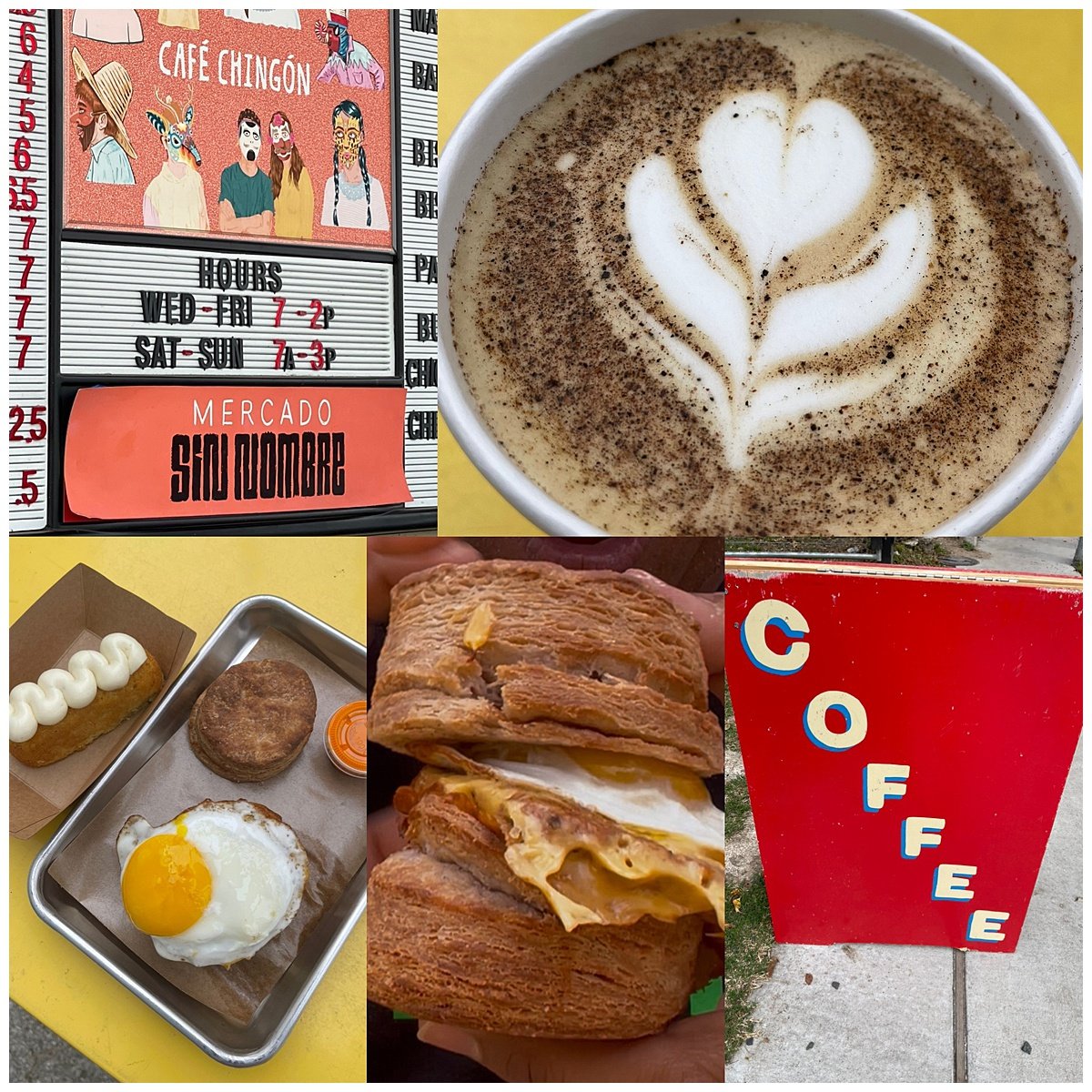
the spot: Mercado Sin Nombre 408 N Pleasant Valley Rd, Austin, TX 78702
the eats: heirloom masa twinkie, killer coffee drinks, and a brilliant biscuit sandwich
the bucks: $-$$
the full nelson: a nationally acclaimed bakery that is literally a little window operation in East Austin
The Vitals:
the spot: Mercado Sin Nombre 408 N Pleasant Valley Rd, Austin, TX 78702
the eats: heirloom masa twinkie, killer coffee drinks, and a brilliant biscuit sandwich
the bucks: $-$$
the full nelson: a nationally acclaimed bakery that is literally a little window operation in East Austin
Mercado Sin Nombre is the kid in class who shows up quietly, gets straight A’s, and suddenly becomes valedictorian. They nixtamalize heirloom corn and turn it into a now-famous “masa twinkie,” but don’t stop there. Their coffee program churns out small-farmer-sourced beans paired with wildly creative (but balanced) drink ideas.
And then breakfast: a blue corn biscuit sandwich with chicken chorizo, a sunny-side egg, and fresno chile hot sauce — the kind of dish that makes you stop mid-bite and renegotiate your beliefs. Bon Appétit already included them on their national breakfast list, but locals have been whispering about them long before that.
 The Vitals:
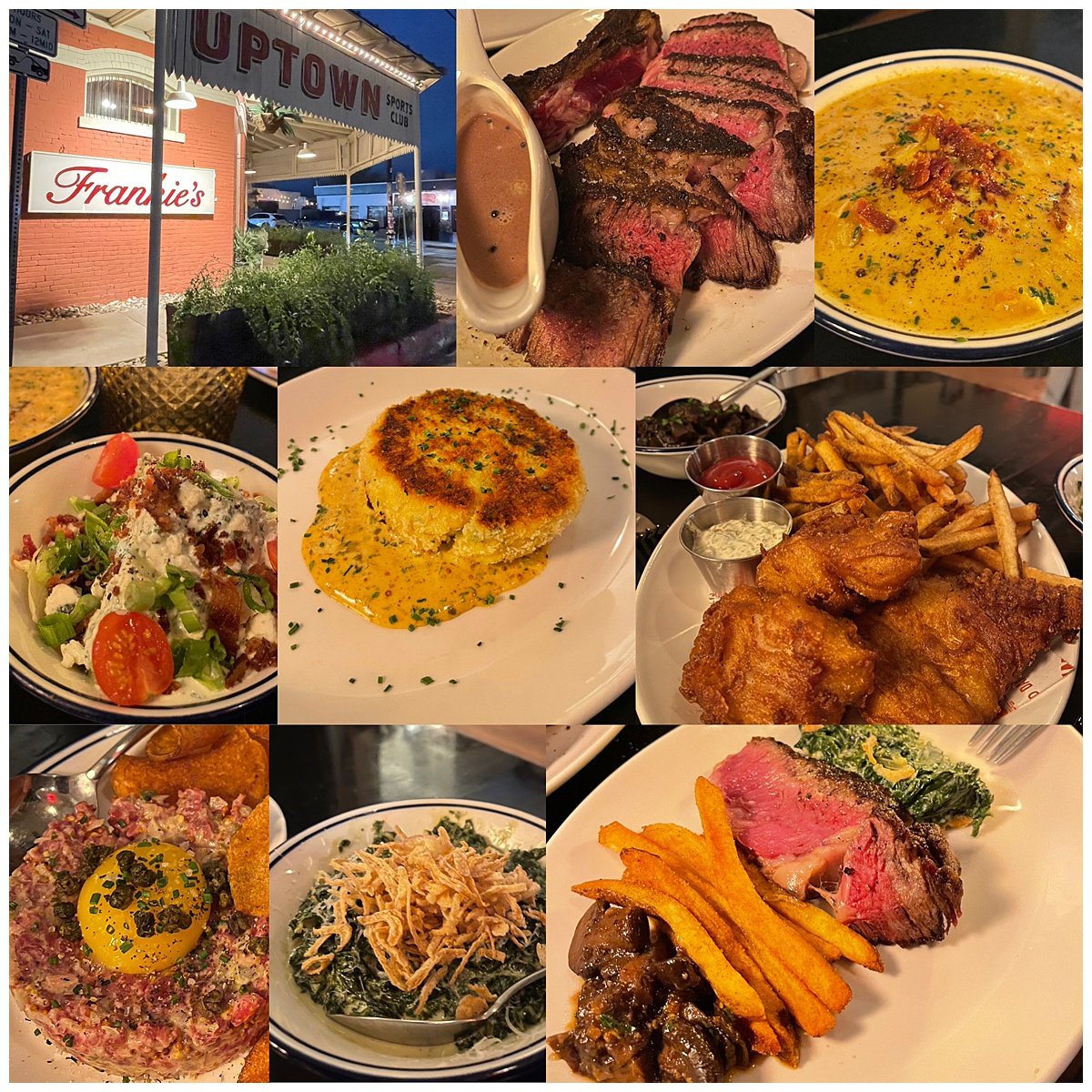
the spot: Frankie's Supper Club Pop Up at Uptown Sports Club 1200 E 6th St, Austin, TX 78702
the eats: Midwestern supper club fare: ribeye for two, fish and chips, wedge salad, everything they ate on Mad Men
the bucks: $$$
the full nelson: a pop up homage to mid century Midwestern supper clubs from the pitmaster who made Austin a culinary destination
The Vitals:
the spot: Frankie's Supper Club Pop Up at Uptown Sports Club 1200 E 6th St, Austin, TX 78702
the eats: Midwestern supper club fare: ribeye for two, fish and chips, wedge salad, everything they ate on Mad Men
the bucks: $$$
the full nelson: a pop up homage to mid century Midwestern supper clubs from the pitmaster who made Austin a culinary destination
Aaron Franklin — yes, that Aaron Franklin — isn’t content with just shaping Texas BBQ. With Frankie’s Supper Club, housed at Uptown Sports Club, he channels Midwestern nostalgia: relish trays, steaks cooked like Friday night ritual, cocktails that lean toward classic rather than trendy. It almost feels like a wink at how Austin dining keeps evolving — and how someone synonymous with brisket can set a different table entirely.
It’s a supper club that feels both transportive and grounded, a reminder that hospitality takes many forms — sometimes smoky, sometimes butter-basted.
Mentioning the likes of Mercado Sin Nombre and Aaron Franklin's Pop Up Supper Club will easily bring the words "Best Food Austin" to the table. But it's the hidden gems like a Jordanian Shawarma joint or even a national Korean BBQ Hot Pot chain that show Austin has something for everyone. Best food Austin is more than a list of elites, it's about range.
Take note, save your pennies, and eat the best food Austin has to offer at any one of these establishments.
For more than 20 years, I’ve been in the trenches of Thanksgiving dinner. Like many food-obsessed home cooks, I’ve chased the perfect turkey as if Gordon Ramsay might walk into the dining room. I’ve brined. I’ve spatchcocked. I’ve dry-rubbed, wet-brined, injected, butterflied, and aromatherapy-infused. I’ve also… melted down more than once.
Because here’s the truth: when you’re a non-professional cook who moonlights as one, timing is the real boss battle. And for years, my ambition steamrolled the very point of Thanksgiving—enjoying the people around the table.
But 2025? I cracked the code.
And yes, the secret was outsourcing.
This was the year the message finally landed. Life threw non-negotiable logistics at us: traveling out of state, staying in a hotel, and not stepping into a kitchen until midday on Thanksgiving itself.
A younger Ali would’ve brined a bird starting Monday. This year? I rolled up at noon on Thanksgiving Day with a turkey in hand… and we still sat down to a calm, happy dinner by 6 p.m.
How? Strategy.
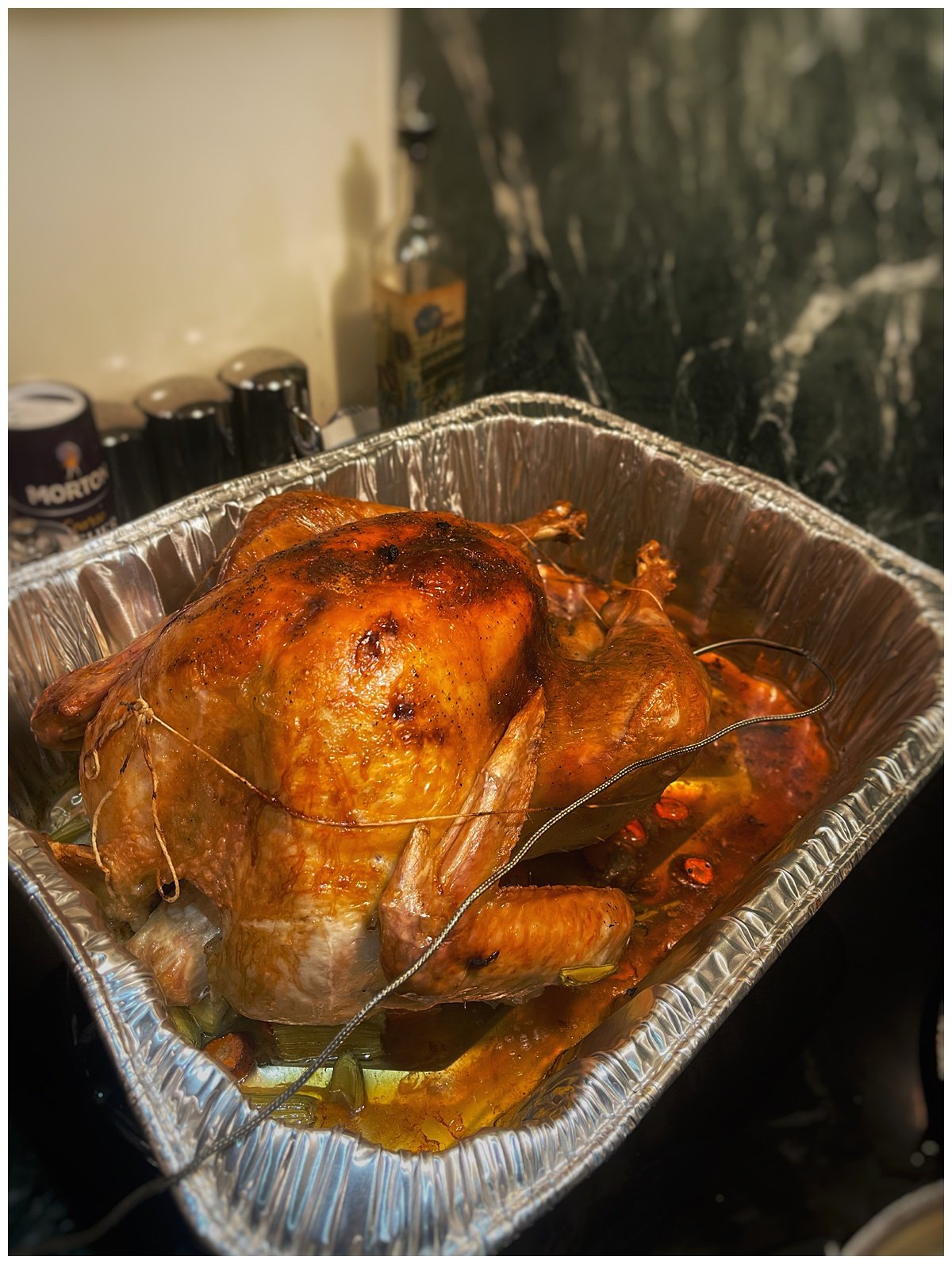
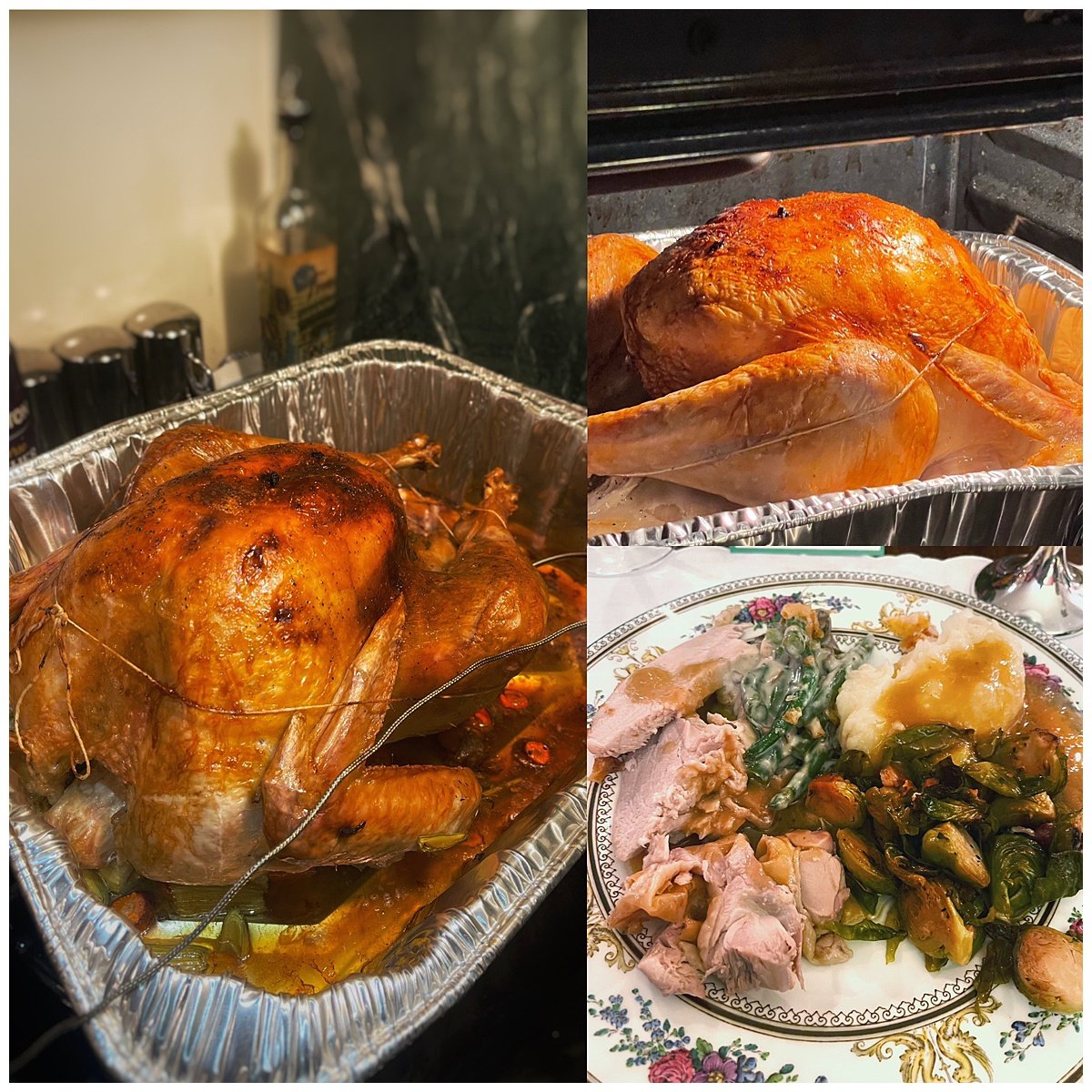
We ordered an oven-ready turkey from Whole Foods and grabbed pre-made sides from a fancy golf club grocery near my in-laws. Thanksgiving sides are the backbone of the meal—and they’re built for advance prep.
Think about it:
Mashed potatoes
Gravy
Stuffing (or dressing if you’re technical)
Roasted Brussels sprouts
Green bean casserole
All of these taste just as good reheated. Period.
So we let the pros handle them… and then all I had to focus on was the bird.
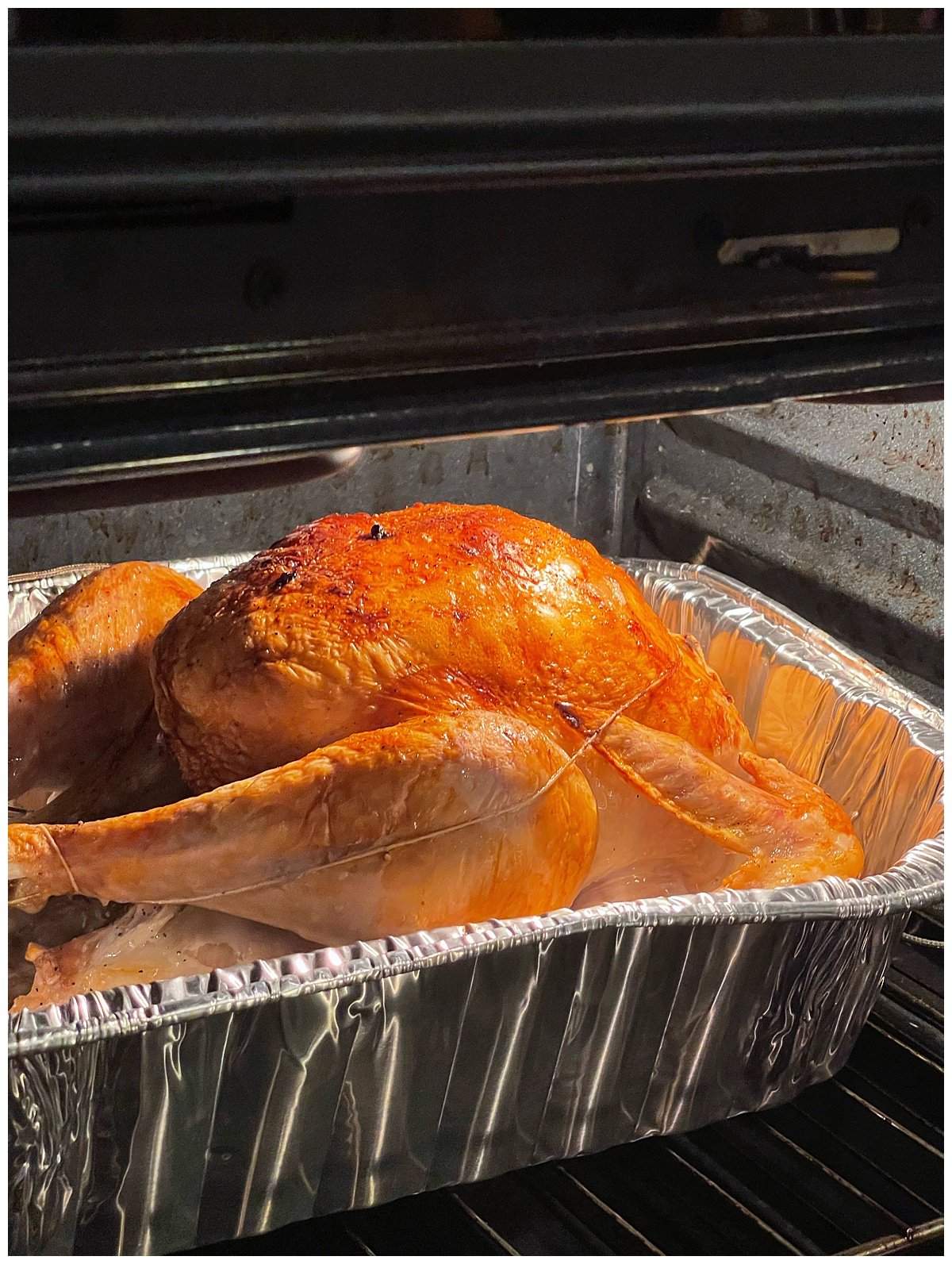
Buying an oven-ready turkey was absolutely the right move. But was the Whole Foods bird flawless? No.
A few hiccups:
Supposed to come fully seasoned and sitting on mirepoix. Reality: the mirepoix was more like a suggestion.
A small lake of thaw liquid meant we had to switch roasting pans.
No weight listed on the turkey, which meant no clear roasting time.
But thankfully, I had the one Thanksgiving tradition I never break.
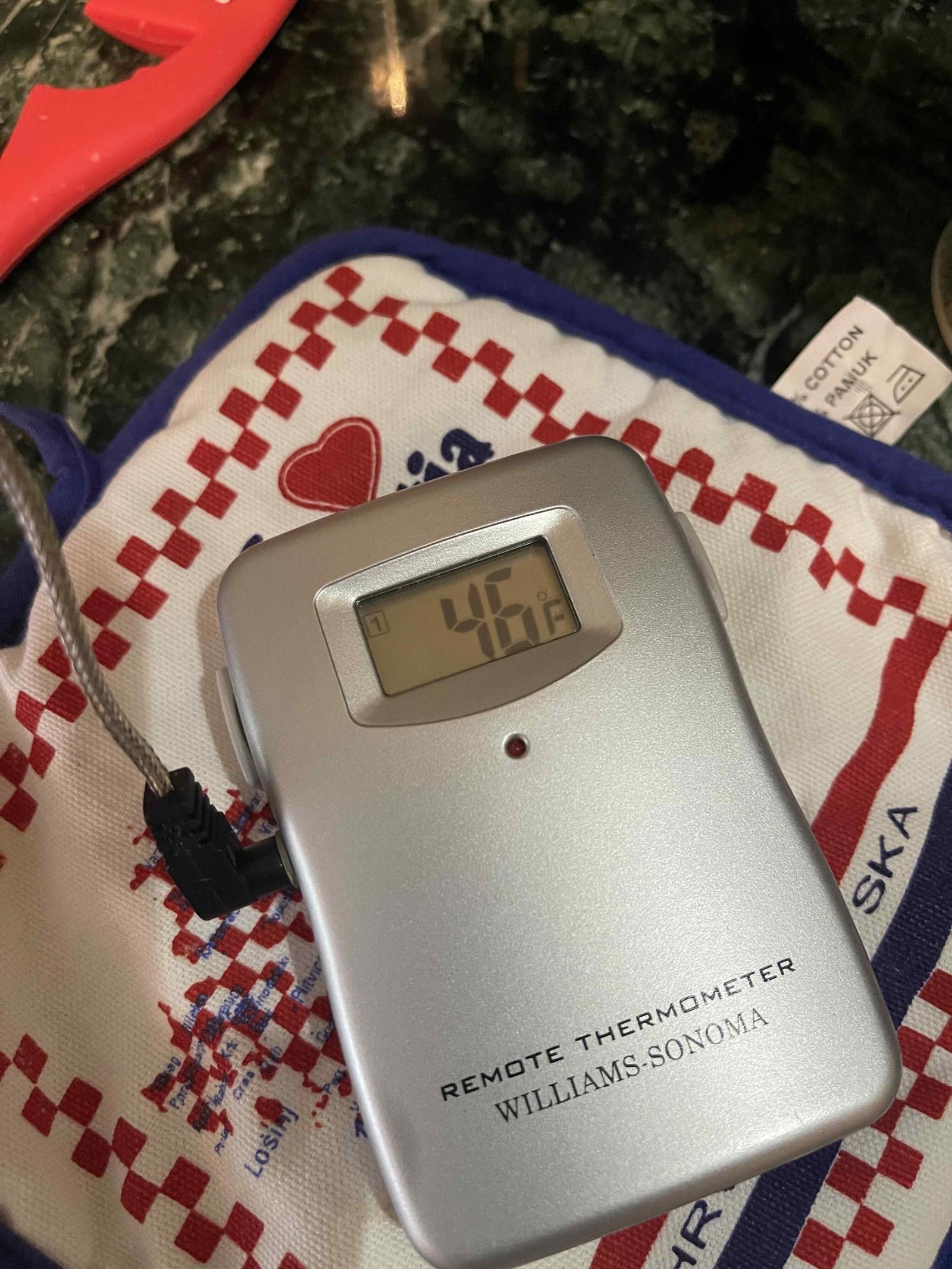
Many years ago, my dad picked up a remote digital roasting thermometer from Williams-Sonoma. That gadget rewired my cooking brain. Since then, I’ve been evangelical about digital thermometers—any brand, any style, as long as it’s digital.
So even though Whole Foods gave us vague roasting instructions—foil on at 325°F until 145°, then foil off and 450°F to finish—the thermometer made the whole thing foolproof.
I temped aggressively, roasted until the breast hit 158°F, and ended up with:
Juicy white meat
Beautifully browned skin
A surprisingly great result from an electric oven
Honestly? Respect to Whole Foods.
Because we outsourced the right pieces, this Thanksgiving felt like jogging to the finish line, not sprinting and still coming in last.
I even had time for my chef-y tweaks—like boosting the premade gravy with pan drippings. And truthfully? I couldn’t have made sides that good myself under those time constraints.
And having a turkey that was already pre-salted (and didn’t require days of fridge space or babysitting)? Game-changing.

Dinner was delicious—but it didn’t steal the show. We played games, laughed, admired a beautifully set table, and went back for seconds. The leftovers slapped, too.
The lesson hit loud and clear:
Thanksgiving is about gathering. The food should support that—not sabotage it.
So yes, I absolutely “cheated” with premade sides. And you can, too. Just choose a great grocery store (or in-laws with a country club hookup). Whatever you spend is nothing compared to the time and calm you get back.