The best food in Austin, Texas, this August includes a two-Michelin-star collaboration, proof that barbecue exists in outer space, neo-Neapolitan pizza that has nothing to do with The Matrix, and a Thai and Vietnamese pop-up soon to become a full-fledged brick-and-mortar restaurant.
Even in the sweltering heart of summer, Austin's restaurant scene doesn't slow down. Here are four Austin restaurants, food trucks and dining experiences worth seeking out this month.
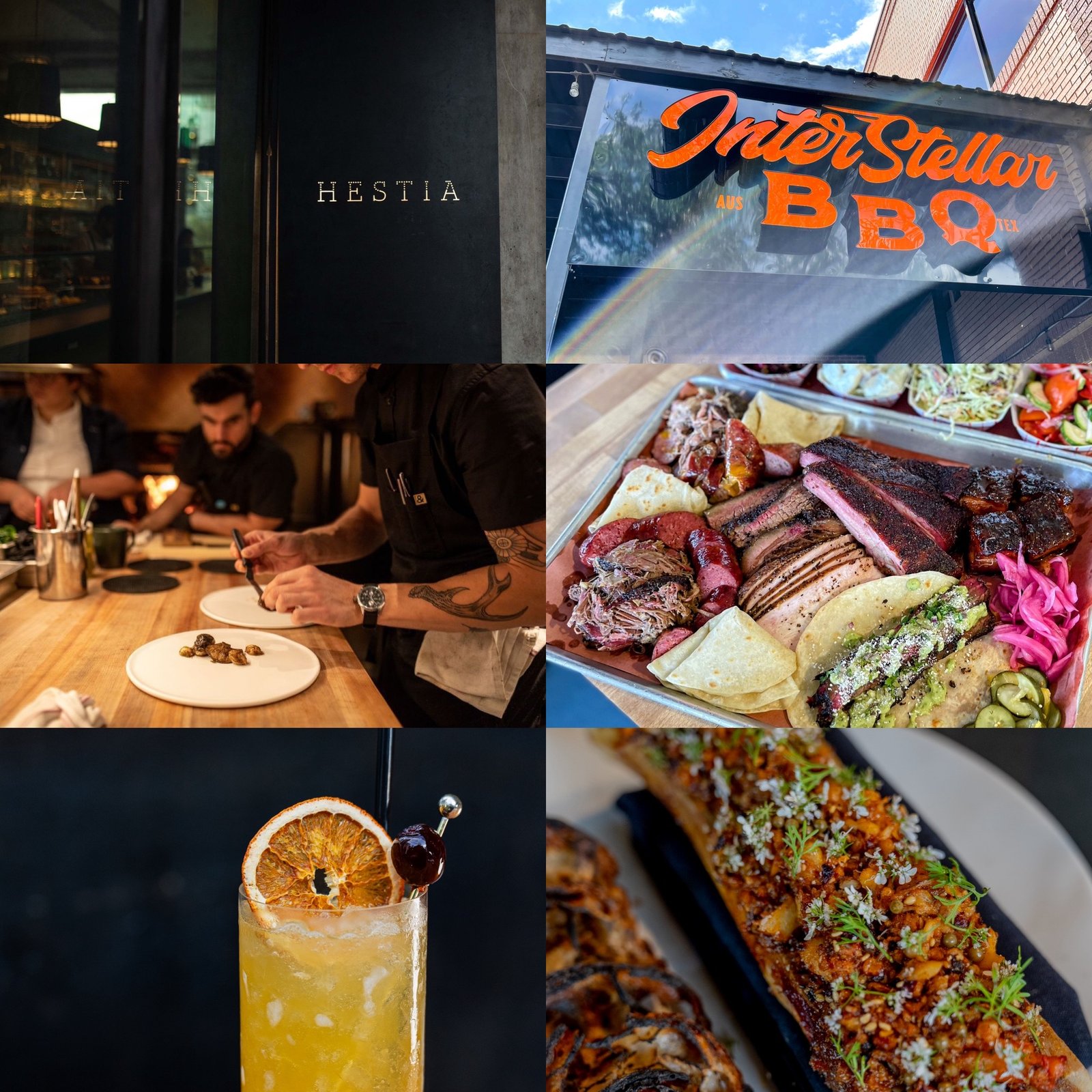
Hestia Lone Star Series Dinner x InterStellar BBQ
What do you get when two Michelin-starred restaurants with a penchant for live-fire cooking collaborate? The latest installment of Hestia's Lone Star Dinner Series, this time featuring InterStellar BBQ. Both restaurants have earned Michelin stars, and they intend to use their powers hopefully for good. At least I'm going to assume they will.
This is literally an all-star, one-off dinner experience, and let's just say I'll be skipping lunch. I don't know what the menu will look like yet, but judging from previous Hestia collaborations with Michelin-recognized restaurants like LeRoy and Lewis and Houston's Tatemó, I'm getting strapped in for a long evening of bespoke barbecue, fine dining baptized by fire and multiple egg-white cocktails.
In a city where barbecue and live-fire cooking have become increasingly ambitious, this is exactly the kind of Austin dining event that shows how far both have come.
This is a one night only event on Tuesday, August 25th 2026 at Hestia. Link to book here
Măm Măm
Excuse me, ma'am, but have you heard the buzz about Măm Măm?
The chef-driven Vietnamese and Thai concept from chef and co-owner Kris Hoang generated enough attention as a pop-up that it's now making the jump to a full-fledged brick-and-mortar restaurant in Pflugerville. In the meantime, there's still plenty of reason to seek out Măm Măm right now.
Start with the Thai-style poached chicken and chicken-fat rice, a dish so popular that the one time it left the menu, loyal fans responded with an uproar. I've become quite enamored with it myself, and Măm Măm's version ups the ante with turmeric-yellow rice truly bathed in chicken fat. That fat is skimmed from a broth that has been fortified by the cooking of literally thousands of poached chickens.
The result is the kind of deceptively simple dish that reminds you how much technique can hide inside a plate of chicken and rice. Drive the speed limit, ma'am, but still hurry over to Măm Măm.
Măm Măm is currently located at Springdale General and plans to move to Pflugerville in the near future.
Space Kat BBQ
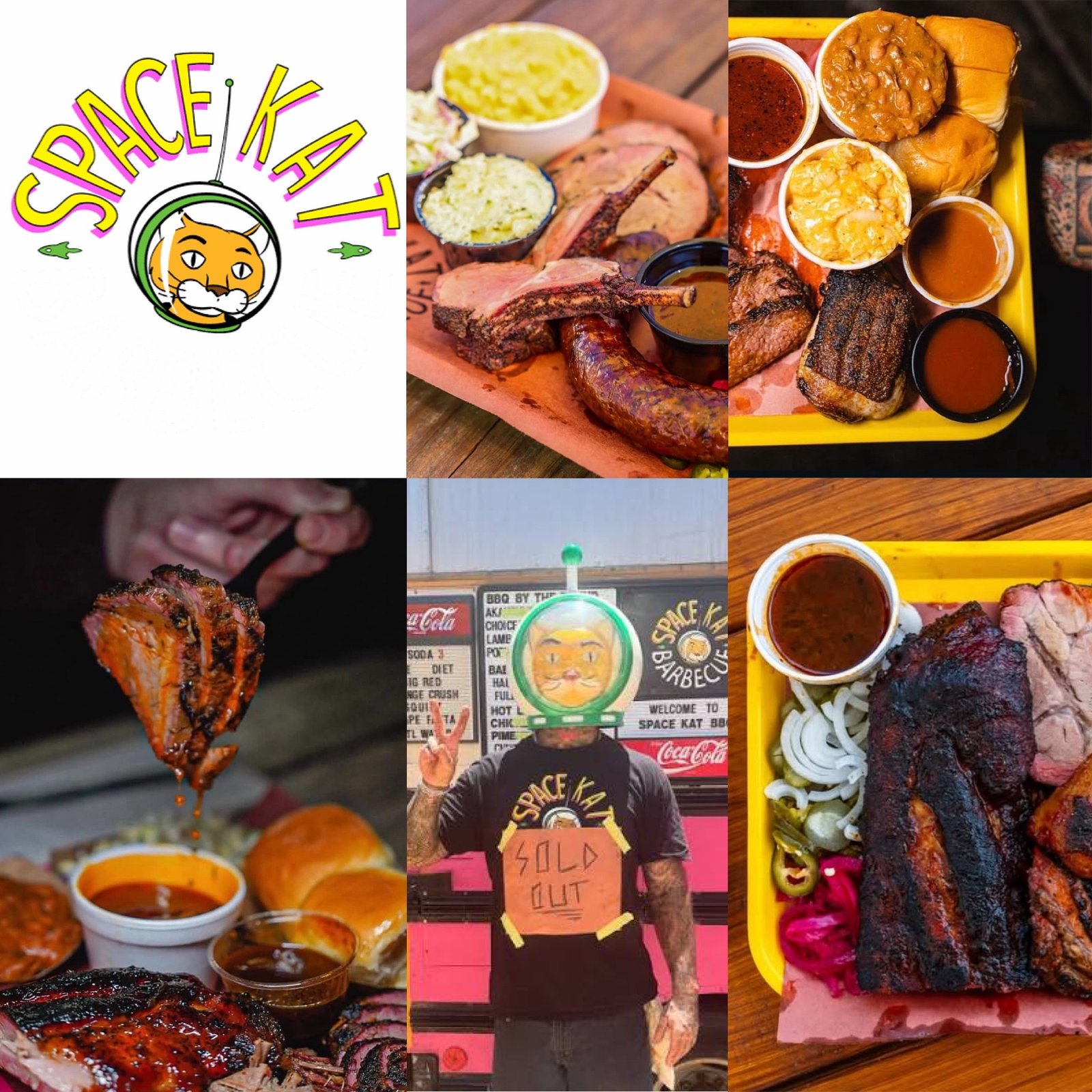
It's not often you get to say "here, kitty kitty" to a cat in a spacesuit, but that's exactly the situation at Space Kat BBQ, one of the newer arrivals on Webberville Road and one of the more interesting additions to Austin's already crowded barbecue scene.
Pitmaster Jack Zizzo has a résumé that includes Barley Swine, and this is one hip Kat who knows a thing or two about cooking meat. But here's the thing: don't show up expecting brisket. Space Kat's cut of choice is tri-tip, and don't sleep on the seldom-seen coppa chop, cut from the pork shoulder.
My typical barbecue pro tip is to skip the sauce because I think it can mask the work of a great pitmaster. Nick's—make that Jack's—barbecue sauce made me break my own rule. I feel bad disclosing his secret ingredient, so let's just say it's the ultimate beverage to pair with a backyard barbecue.
Standing out in Austin barbecue requires more than smoking a good brisket these days. You need a point of view, an interesting menu and formidable technique. If you're looking for all three, apparently you should seek out the astronaut cat.
Side Eye Pie
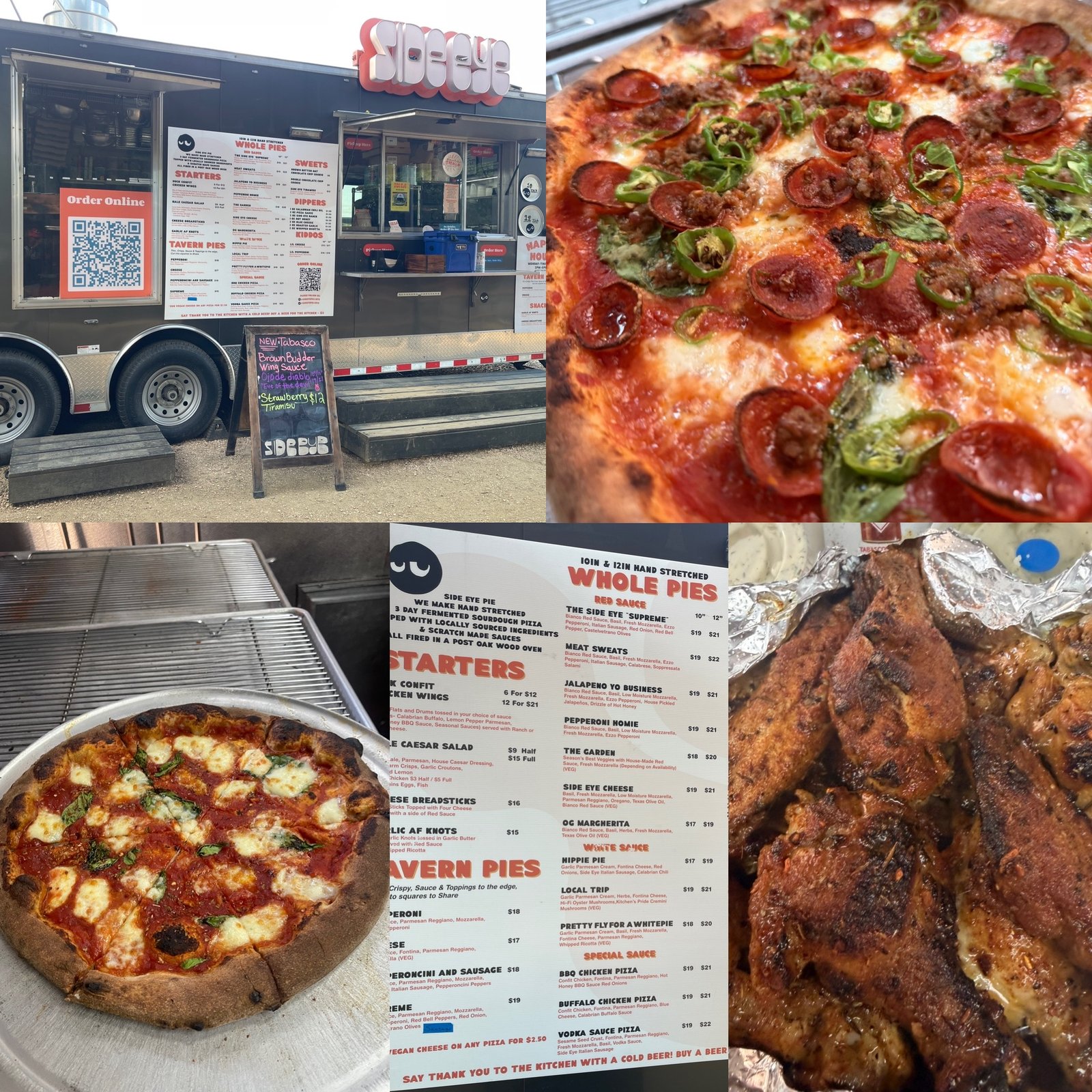
Pizza might not be quite as crowded a category as barbecue in Austin, but the city has been blessed with more than its share of talked-about pizza spots. Side Eye Pie stands out on that increasingly long list thanks to chef Tony Curet, whose approach to neo-Neapolitan pizza combines serious technique, familiar pizza comforts and an intensely hot wood-fired oven.
The pizzas start with cold-fermented dough made with Texas Red Wheat flour and native yeast before hitting a post-oak-fired oven. The result lands somewhere between Neapolitan tradition and a distinctly Austin interpretation of what modern pizza can be.
But here's my pro tip for any great pizza joint: if they serve wings, try the wings.
At Side Eye Pie, that's especially true. Working without a traditional fryer, Curet found a far more interesting solution: the wings are confited in duck fat off-site and then fired to order. The result is one of the more unique chicken wings I've encountered in Austin, and perhaps anywhere.
Come for some of the best wood-fired pizza in Austin. Just don't overlook the wings.
Last Bite
Austin's food scene keeps on trucking, even in the heart of a sweltering Texas summer. This month's standouts also happen to demonstrate just how varied eating in Austin has become, from a Michelin-starred barbecue collaboration to Southeast Asian comfort food, a barbecue trailer willing to skip brisket entirely and an Austin pizza shop confiting chicken wings in duck fat.
That's what keeps eating around this city interesting. There is always another chef trying something new, another trailer challenging what an Austin staple is supposed to look like, and another dish worth driving across town to try. So nosh on neo-Neapolitan pizza, pounce on Southeast Asian-style poached chicken and indulge in the occasional Michelin-starred mashup.
Pro tip: save room for September.
Best Value Steak in 2026: Is Wagyu Chuck Eye Worth Buying?
Cheap steak hasn't disappeared—it just got a lot more expensive. Here's where I found the best value in today's supermarket.
I haven't bought flank steak in over a year.
Not because I stopped liking it.
Because I stopped liking the price.
For most of my adult life, there was always a cut of beef that made steak night feel attainable. Flank steak. Skirt steak. Chuck eye if you knew where to look. Resourceful home cooks have always found ways to turn lesser cuts into something memorable.
Today, those "cheap" cuts often cost fifteen dollars a pound or more.
Ground beef starts around six dollars a pound where I live in Texas, and we're still fortunate enough to have grocery prices that are generally lower than much of the country. Walk past the butcher case today and you'll find supermarkets slicing beef shoulder into thin "steaks," borrowing a trick long used by Mexican carnicerías in an effort to squeeze more value out of every part of the animal.
At some point, creativity stopped being about discovering hidden gems and started becoming a survival strategy.
🎥Watch the full episode of Outrageous Foods!
Why Has Beef Become So Expensive?
Before getting into my steak taste test, it's worth understanding why beef prices feel so different than they did just a few years ago.
There isn't one simple explanation.
A combination of higher feed and fertilizer costs following the COVID-19 pandemic, persistent drought that reduced cattle herds, rising transportation and labor costs, and broader inflation have all pushed beef prices higher. Trade uncertainty and tariffs have added additional pressure to parts of the global beef market.
The result?
Beef has become one of the biggest luxuries in the grocery store. Which raises a more practical question than simply asking why it's expensive.
If you're already spending the money, where's the best value?
That became the premise behind this week's episode of Outrageous Foods. I wasn't looking for the cheapest steak.
I was looking for the smartest purchase.
While filming at my local supermarket, one of the butchers noticed what I was doing and walked over with a suggestion.
"You should try the domestic Wagyu."
It wasn't what I expected.
Twenty years ago, simply seeing the word Wagyu on a label felt exotic. Even domestic Wagyu carried an aura that suggested something extraordinary. Today, the term has become much more common, and like many premium food labels, it has lost a bit of its mystique.
Still...
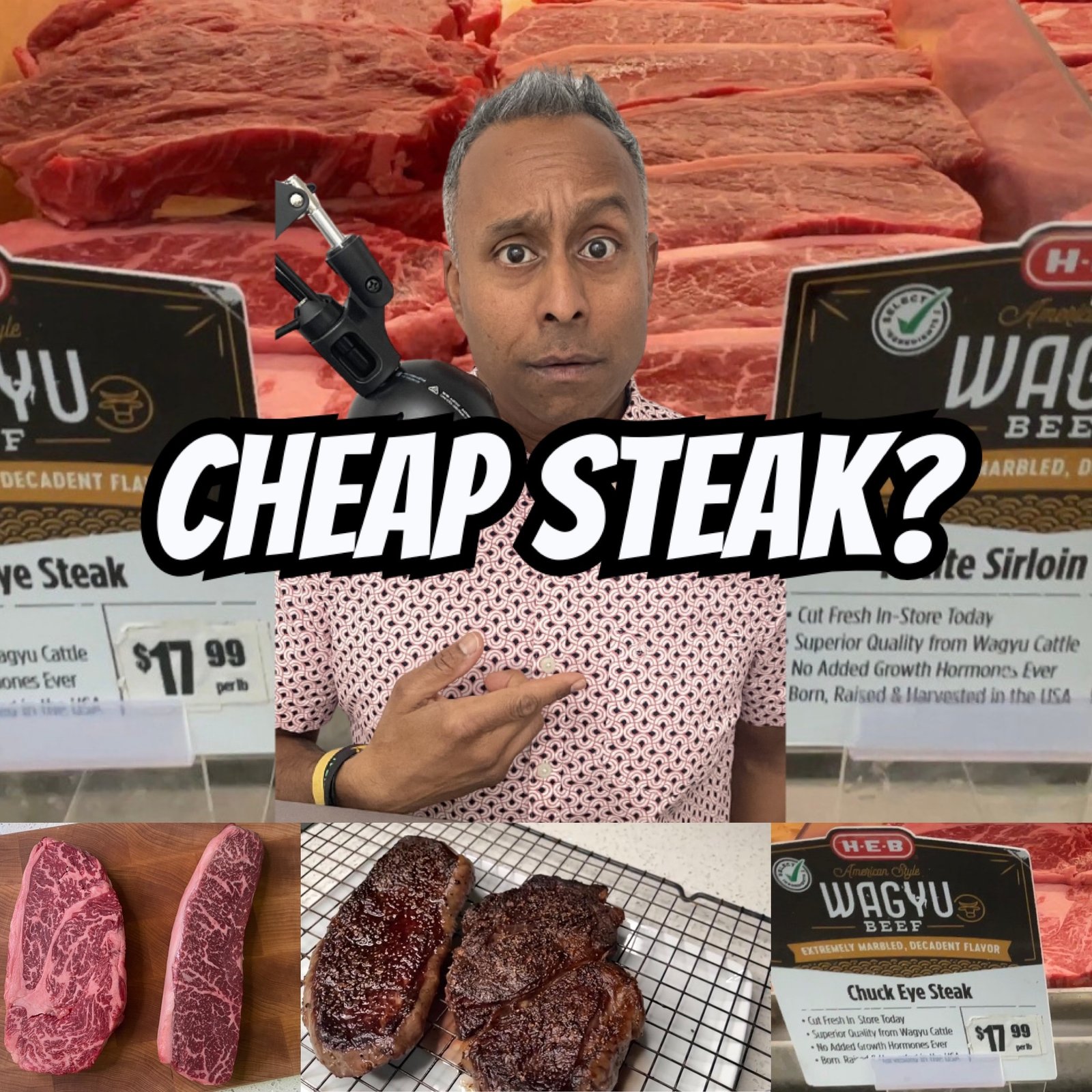
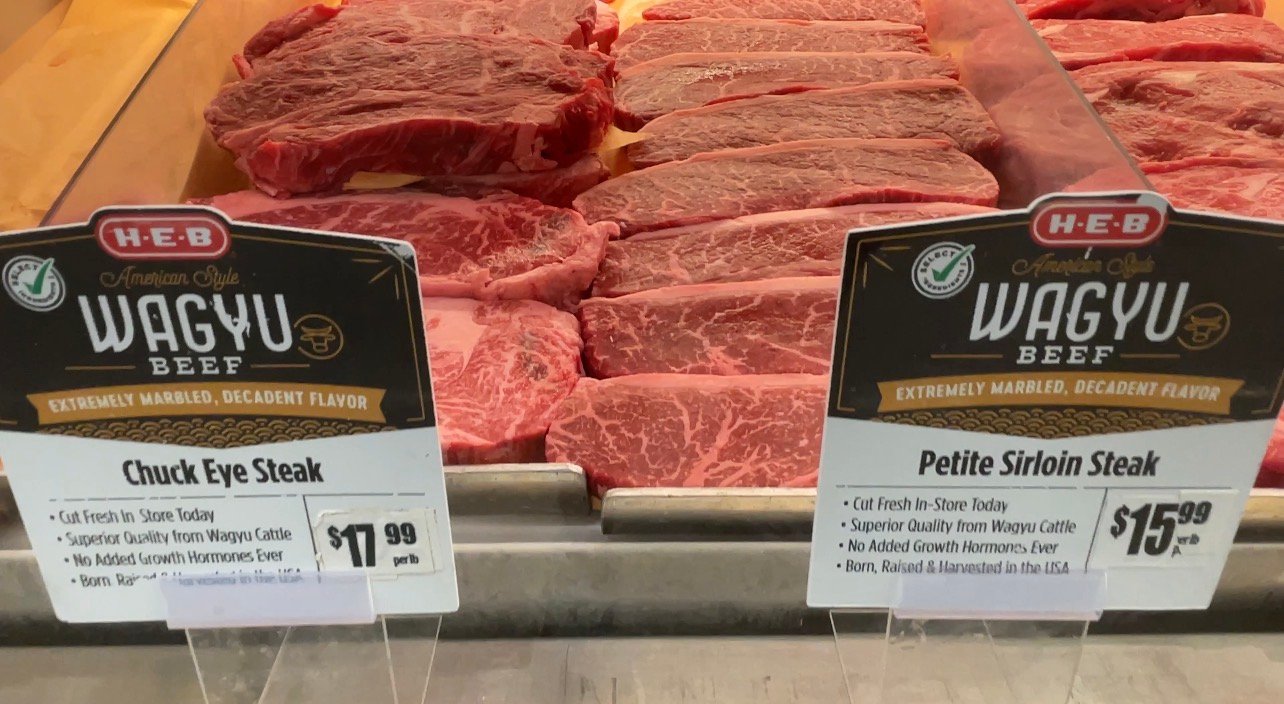
Good marbling is good marbling. And marbling usually translates into flavor. The butcher pointed me toward two cuts: a domestic Wagyu Chuck Eye and a domestic Wagyu petite sirloin.
Chuck Eye vs. Petite Sirloin
Normally I'd gravitate toward the less expensive steak. Every dollar matters these days. But for the sake of the experiment, I spent the extra couple of dollars and bought both.
The chuck eye came in around $18 per pound. The petite sirloin was closer to $16. Neither qualifies as cheap.
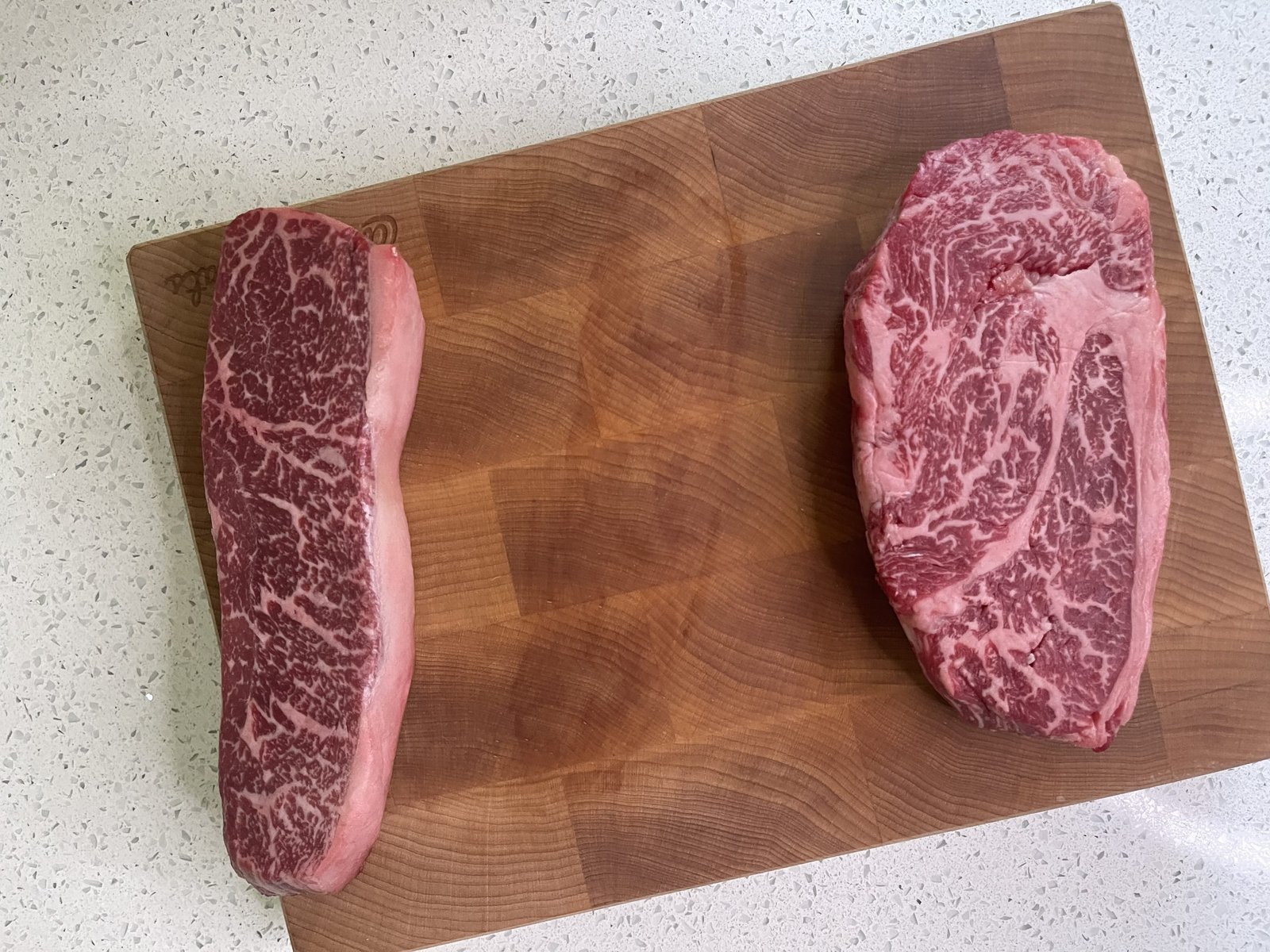
For perspective, traditional chuck eye and picanha often sold for roughly half those prices only a few years ago. Still, something immediately stood out. Neither steak was a premium cut like ribeye or strip steak. Yet both displayed significantly more marbling than the USDA Prime steaks sitting next to them in the butcher case.
That alone made me curious.
The Taste Test
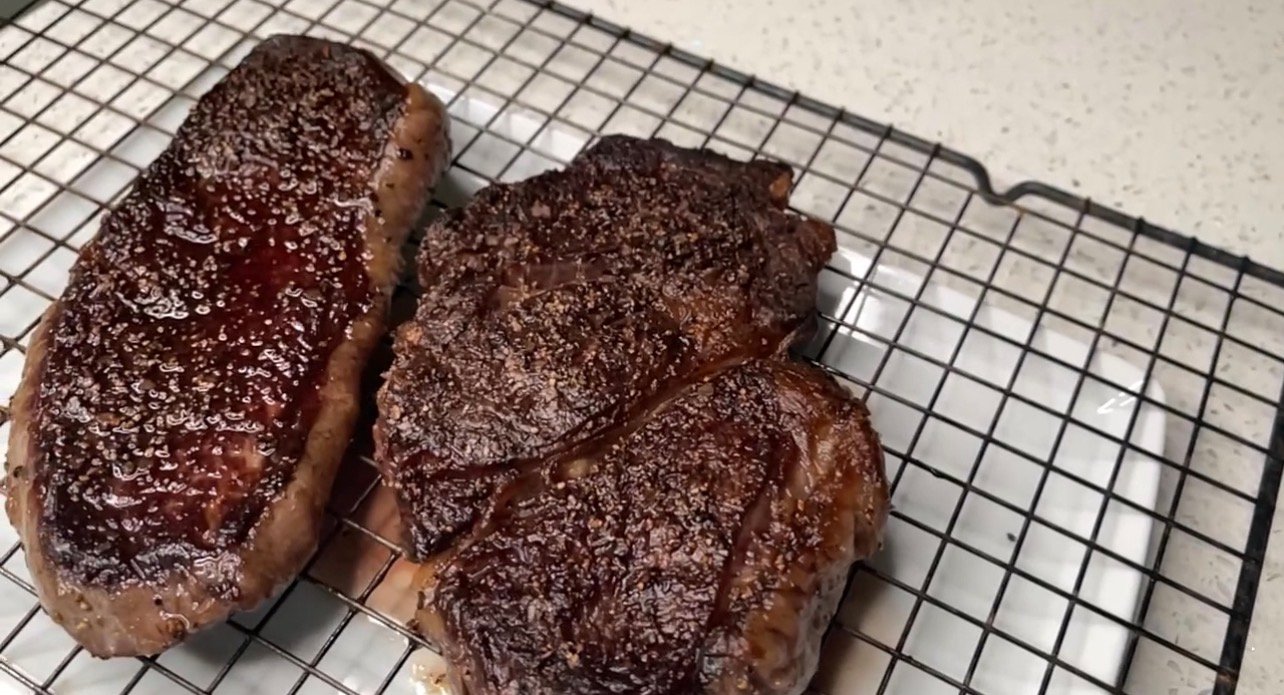
I cooked both steaks exactly the same way.
Cast-iron skillet.
Oven finish.
Kosher salt.
Fresh cracked pepper.
Garlic powder.
Onion powder.
Ironically, I slightly overcooked both steaks because I was busy filming. Normally I'd call that a mistake. Instead, it turned into the most interesting part of the experiment. The additional cooking time rendered more of the intramuscular fat, making both steaks taste almost butter-basted despite never seeing a pat of butter. Perhaps medium isn't such a terrible place for heavily marbled beef after all.
The Winner:
The chuck eye was the clear winner. It was literally my first taste of a Ribeye steak in a year.
The petite sirloin was still enjoyable, but it carried a slightly gamier flavor and a firmer texture. A good steak. But not one I would crave enough to spend the money.
The New Definition of Value
One thing I've learned while making Outrageous Foods is that the cheapest option rarely represents the best value. I've seen it with burgers. I've seen it with sandwiches. Beef may be the best example yet.
Once steak reaches fifteen dollars a pound, saving another dollar or two becomes less important than buying the right steak in the first place. That's the lesson this taste test reinforced.
If you're already opening your wallet, spend your money on quality instead of simply chasing the lowest number on the price tag.
How I'm Buying Beef in 2026
After this experiment, my own shopping habits have changed.
When I want steak, here's what I'm looking for:
Buy the best marbling you can reasonably afford.
Look for chuck eye when it's available.
Save ribeye and strip steak for special occasions.
Stretch beef further with tacos, kebabs and stir fries.
Skip bargain "steaks" that sacrifice texture simply to hit a lower price.
Cheap beef may be gone.
Good value isn't.
You just have to shop differently.
Last Bite
Steak has always been considered a luxury. What's changed is that the cuts which once made steak affordable have quietly joined it. Flank steak, skirt steak, and chuck eye used to be the insider's play—the cuts savvy cooks sought out because they delivered great flavor without the premium price tag. Today, even those bargains have become expensive enough to make you think twice before throwing them into your shopping cart.
That doesn't mean steak is off the menu. It simply means the definition of value has changed. After tasting both domestic Wagyu cuts, I came away convinced that spending a little more on quality is often a better investment than chasing the cheapest steak in the butcher case. In today's market, the gap between "cheap" and "good" has narrowed considerably.
That's become one of the recurring lessons of Outrageous Foods. Whether I'm reviewing burgers, sandwiches, barbecue or now beef, the best value rarely sits at either extreme. The cheapest option often disappoints, while the most expensive one usually comes with diminishing returns. Somewhere in the middle is where knowledge begins to save you money.
Maybe that's the real takeaway from today's beef prices. We can't control inflation, drought or the cost of raising cattle, but we can become smarter shoppers. And in 2026, knowing what to buy may be just as valuable as knowing how to cook it.
 Hestia Lone Star Series Dinner x InterStellar BBQ
 Space Kat BBQ
 Side Eye Pie
 Best Value Steak in 2026: Is Wagyu Chuck Eye Worth Buying?
 Chuck Eye vs. Petite Sirloin
 The Taste Test
 Last Bite