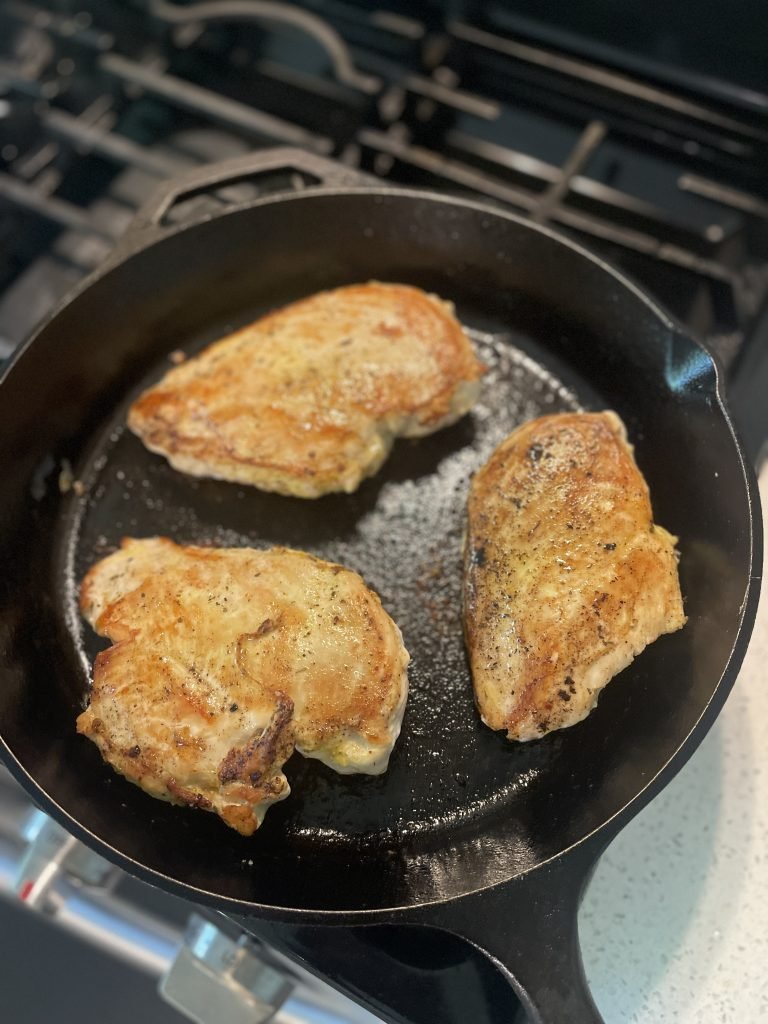
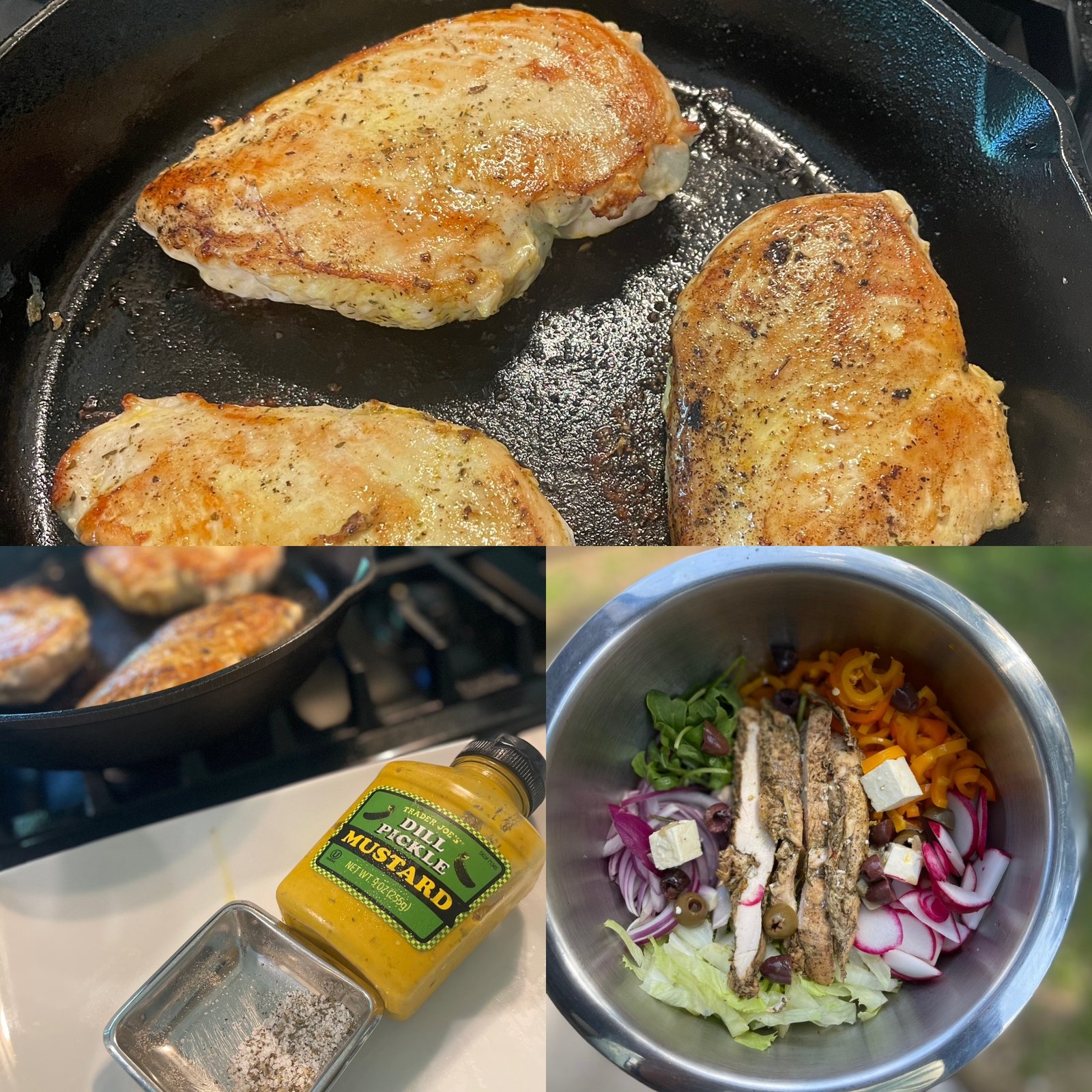
 My Low-Calorie Chicken Breast Meal Prep Recipe (Mustard Binder Method)
Meal prep—not workouts—is probably the biggest reason I’ve managed to stay in shape.
Sure, I enjoy sweating through an hour of boot camp even in ninety-degree Texas heat. Burning five hundred calories feels great.
But the truth is, what keeps me from gaining weight isn’t what happens during that hour.
It’s what happens Tuesday afternoon when I’m hungry and need lunch in five minutes.
What gets in the way of eating healthy in modern life is time.
Full stop.
Like most families, ours is busy. We’re constantly running to the grocery store because I’d rather buy fresh food than fill the pantry with shelf-stable processed snacks. That also means I don’t want to overbuy. Food spoils. Plans change.
To make things even more interesting, my son is a teenager with the metabolism of a hummingbird. He can demolish refined carbohydrates without a second thought. Meanwhile, my wife and I tend to build lunches around salads and lean protein.
That’s why I almost always keep cooked chicken breast in the refrigerator.
Recently I stumbled onto a little trick borrowed from the barbecue world that has made my meal prep even better.
Mustard.
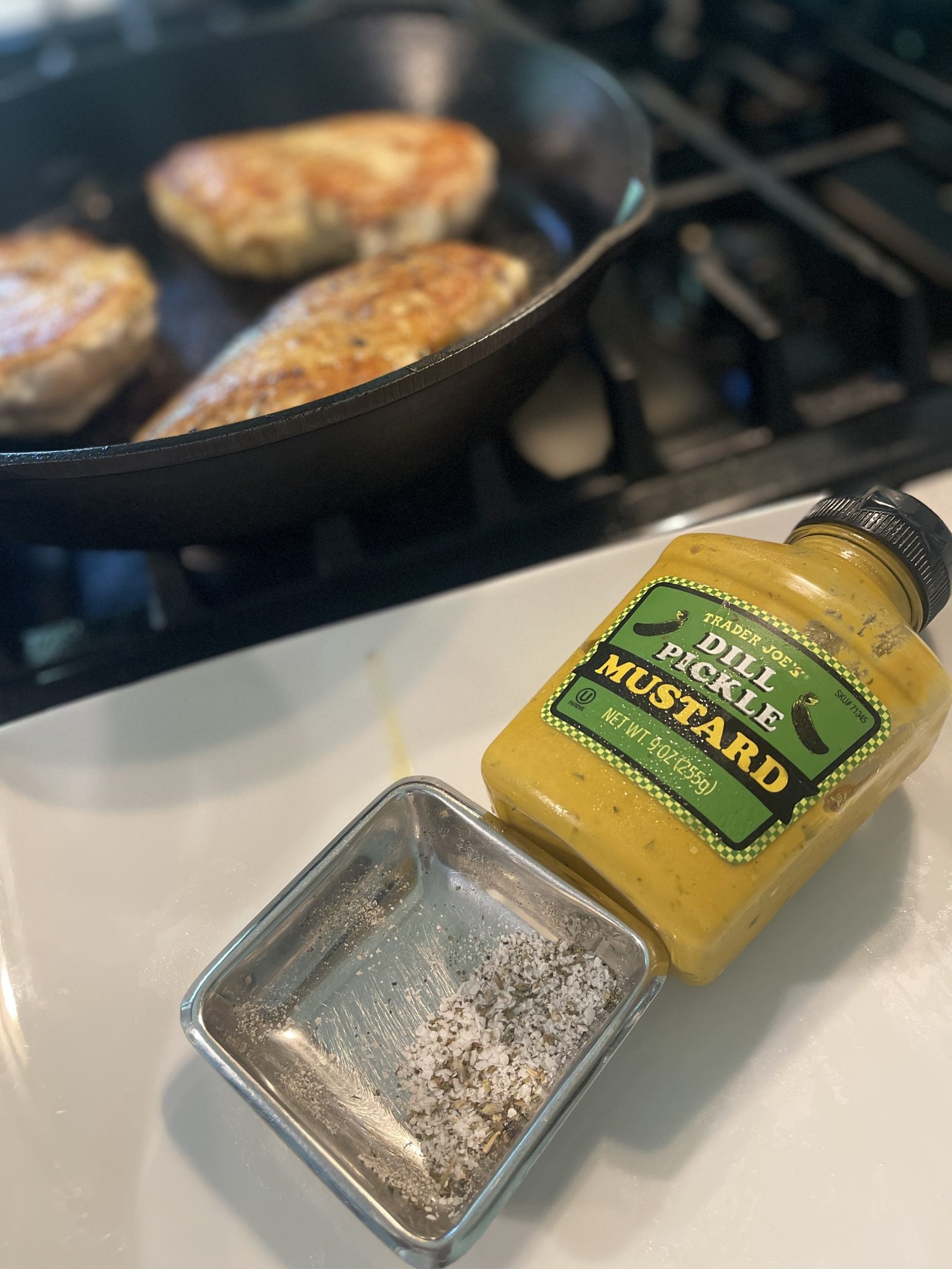
Barbecue cooks have been using mustard as a binder for years. The idea is simple: coat the meat with a thin layer of mustard before seasoning so the spices adhere evenly.
What I hadn’t considered until recently was how well this works for healthy meal prep.
Unlike oil-based marinades, mustard contributes very few calories while helping create an even coating of seasoning. Better yet, it adds a subtle tang and pairs beautifully with herbs.
I happened to use a dill pickle mustard because that’s what I had on hand, but Dijon, yellow mustard, spicy brown, or whole-grain mustard all work beautifully.
In fact, I’m a firm believer in keeping multiple mustards in the refrigerator. They’re inexpensive, low in calories, and each brings its own personality to the table.
 Instructions
Pat the chicken breasts dry with paper towels.
Spread about one to two teaspoons of mustard evenly over each breast.
Season generously with kosher salt, black pepper, and Herbes de Provence.
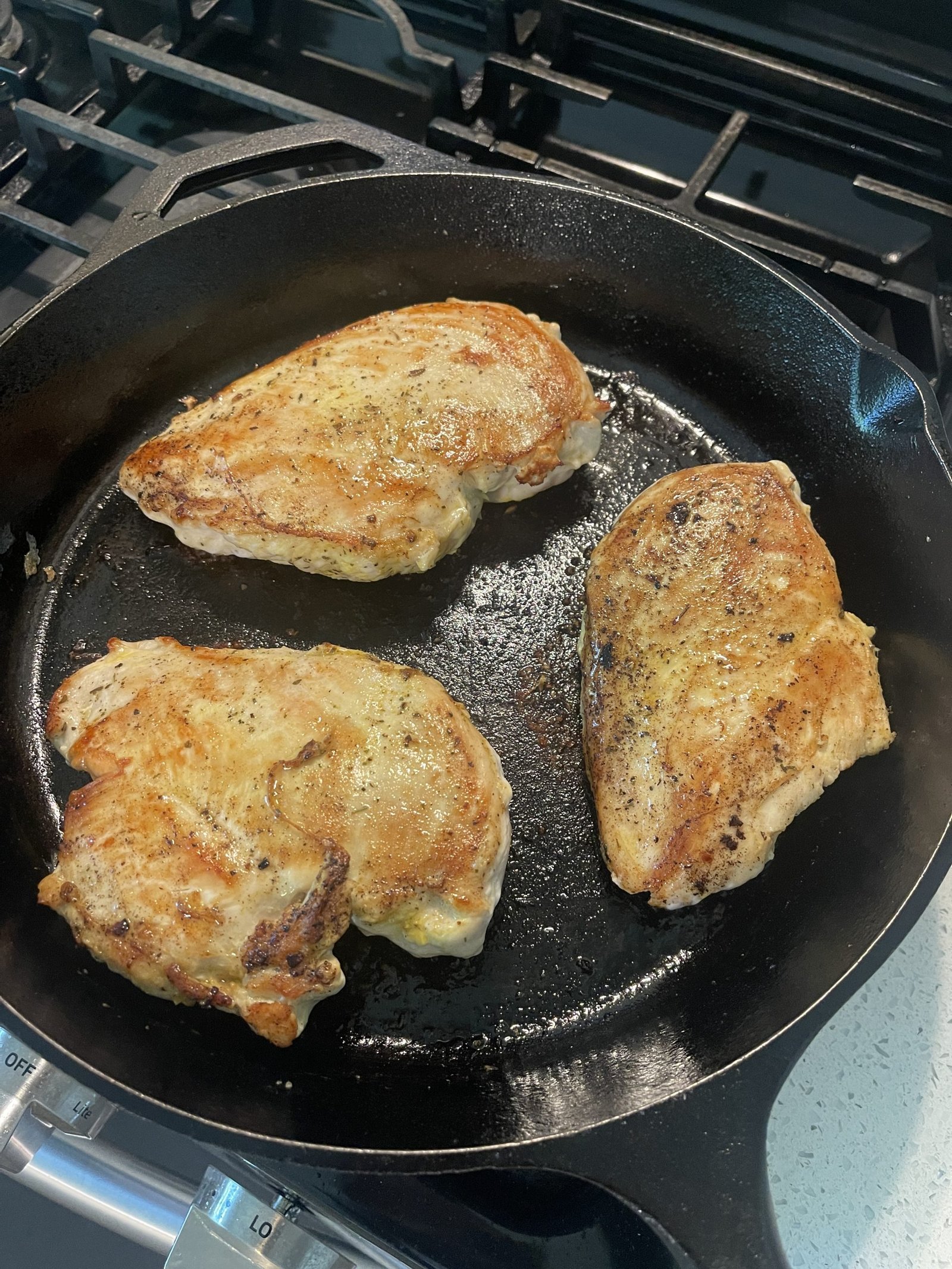
Heat a heavy-bottomed nonstick skillet over medium-low heat. Add a small amount of oil if needed.
Cook the chicken, turning once or twice, until the internal temperature reaches 160–165°F.
Allow the chicken to cool completely before slicing or storing.
Refrigerate and use throughout the week for salads, wraps, grain bowls, or quick lunches.
As the chicken cooks, the mustard and herbs become surprisingly aromatic. The kitchen smells like the beginning of a classic French pan sauce—mustard, herbs, and roasted chicken—even though the finished chicken remains clean and versatile enough for meal prep.
The biggest benefit, however, is flexibility.
Because the seasoning sticks so well, I can use less(or no) oil without sacrificing flavor. Those calories may seem insignificant on one meal, but over the course of a week they add up. And if you’re someone like me who also enjoys restaurants, barbecue, burgers, and the occasional drink, saving calories at home gives you a little more flexibility when you go out.
Healthy eating isn’t about perfection.
It’s about making the better choice often enough that it becomes your default.
This chicken has quietly become one of mine. It arguably enhances the flavor and, at the very least, breaks up the monotony of chicken breast—arguably one of the world’s least exciting foods.
If you’re looking for another healthy weeknight protein, check out my Reverse-Seared Traeger Salmon recipe.







Leave a Reply